
What Is a Sleeve Anchor? Understanding Its Role in Construction and Industrial Fastening
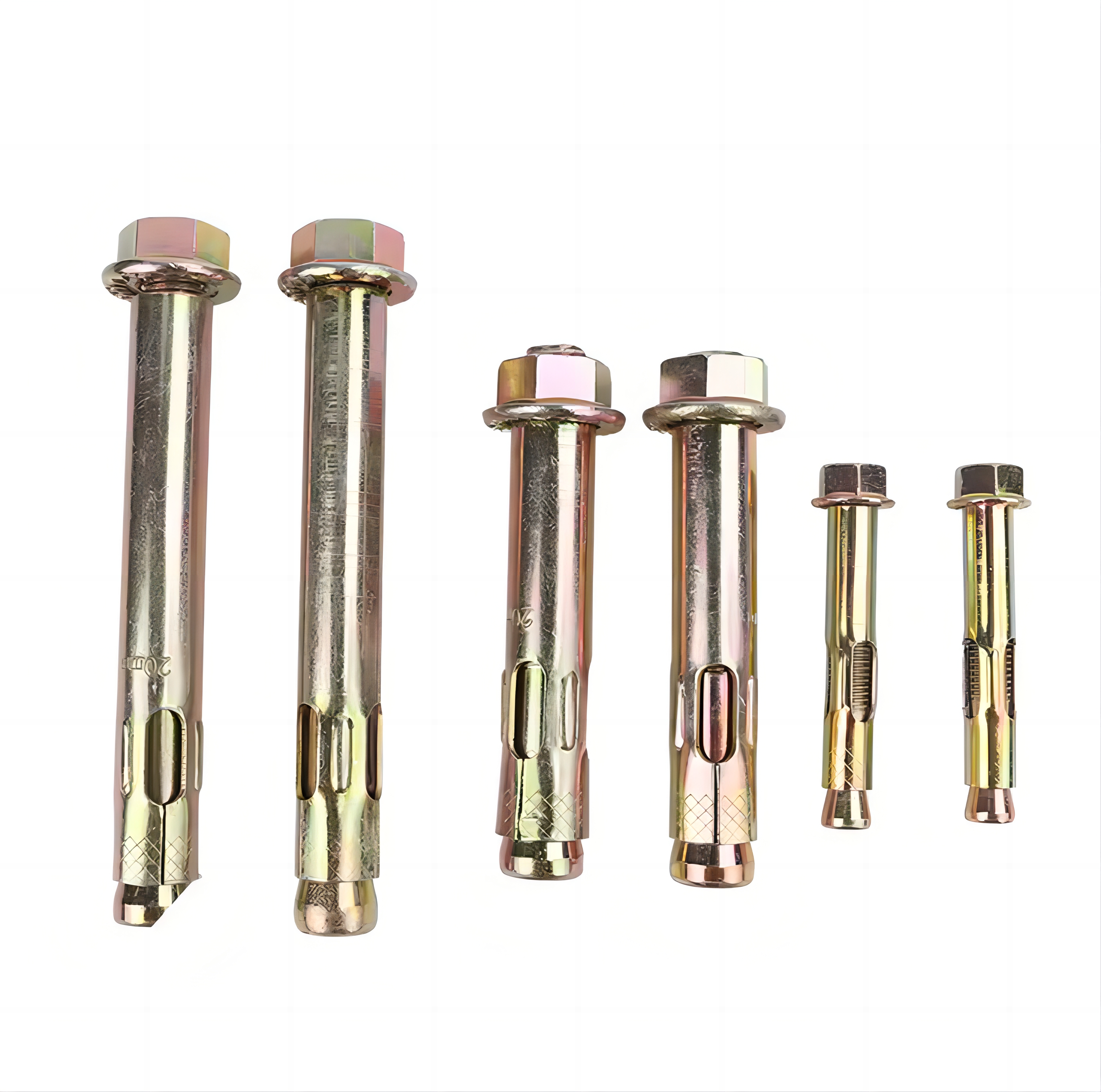
A sleeve anchor is a post-installed mechanical fastener that expands inside a drilled hole in concrete or solid masonry to hold a fixture in place. Tightening the nut or the bolt head draws a tapered cone into a slotted expansion sleeve, pressing the sleeve outward against the wall of the hole so the anchor grips through friction and mechanical interlock.
That definition explains the mechanism, but it does not answer the question a buyer actually faces at the decision stage: which fixing method, which configuration and which supplier will carry the specified load for the life of the project at a defensible total cost. Those three decisions are made in different places and usually by different people, and the evidence that supports them is not the same.
This explainer sets out what a sleeve anchor is, how the expansion mechanism works, which configurations exist, how the anchor is specified and installed step by step, where it is used, and how it compares with alternative fixing approaches. It also explains why documentation now shapes supplier selection, including IATF 16949:2016 for process control and product carbon footprint assessment under ISO 14067.
The Fastening Problem a Sleeve Anchor Solves
A sleeve anchor addresses a specific installation condition: a fixture must be fixed to a base material that has already been cast or built. The concrete has cured, the masonry wall is standing, and there is no cast-in insert, no threaded socket and no access to the far side of the structure. The anchor has to create its own load path from the fixture into the base material.
Typical fixtures include equipment bases, conveyor and crusher frames, guardrails, curtain wall brackets, photovoltaic mounting supports, cable trays and structural steel connections. In each case the sleeve anchor has to do three things at once: clamp the fixture, transfer load into the base material, and keep doing so under the environmental conditions of the site.
Failure happens when one of those three functions breaks down. Three failure modes dominate field experience:
- Pull-out. The anchor leaves the hole. Common causes are weak or damaged concrete, an oversized drilled hole, insufficient embedment depth, or load beyond the anchor capacity.
- Loosening. The anchor stays in place but loses preload. Incorrect hole size, insufficient embedment, an unsuitable base material or incorrect tightening torque all reduce anchoring performance.
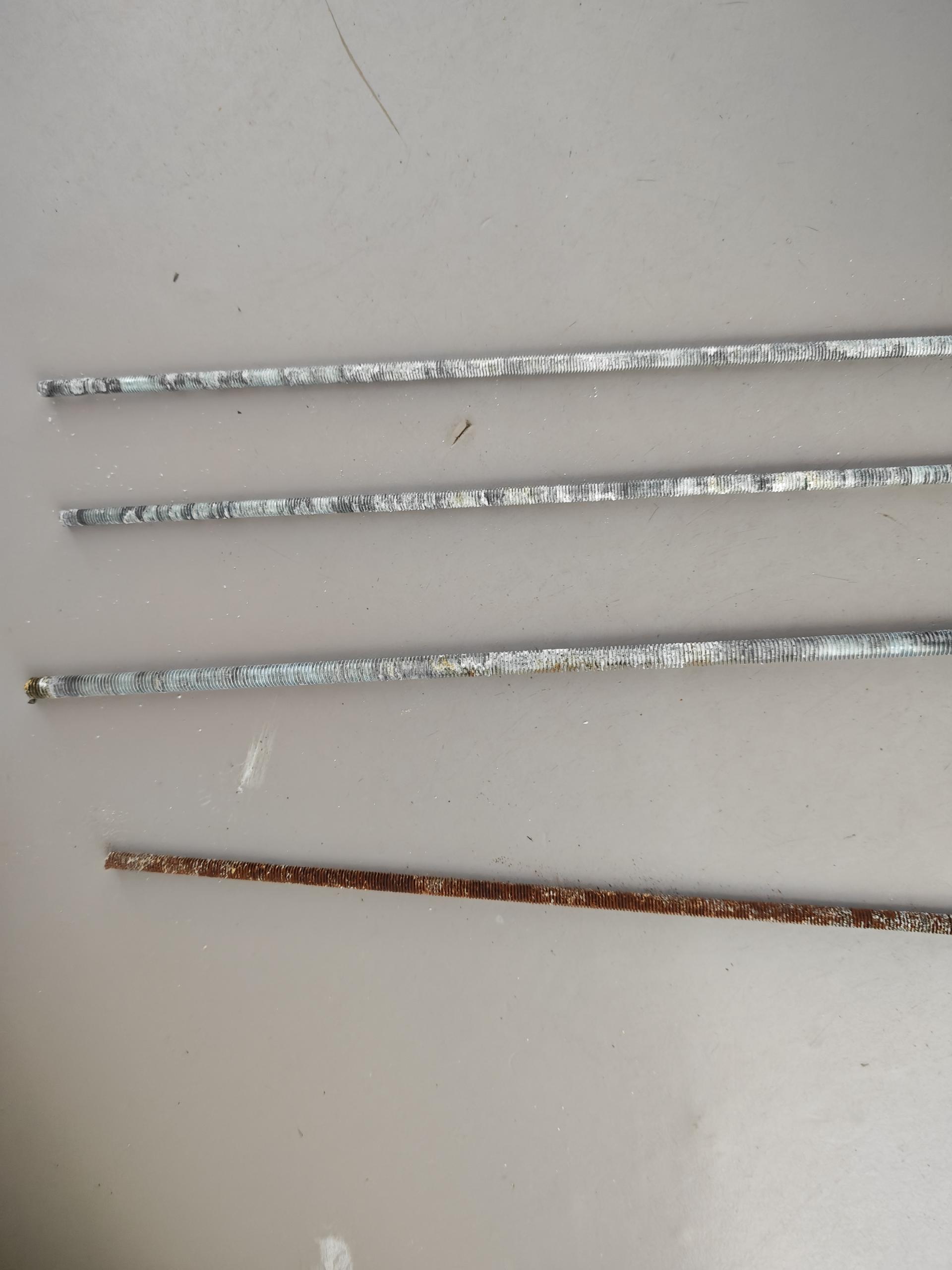
- Corrosion. Outdoor, rain-immersed, coastal salt-spray and humid chemical environments attack ordinary galvanized surfaces, and oxidation can progress into anchorage failure rather than a cosmetic problem.
The practical consequence is that a sleeve anchor is not a line item where the lowest unit price is automatically the safest default. Load capacity and durability are set by the interaction of anchor diameter, embedment depth, hole diameter, edge distance, tightening torque and base-material condition, so two anchors with the same nominal size can behave very differently on the same site.
Industry Background: Why Anchor Selection Has Become a Documented Decision
Anchoring fasteners are a substantial industrial category rather than a niche hardware line. Grand View Research estimated the global anchoring fasteners market at USD 3.12 billion in 2024, and reported that the mechanical anchors segment, which includes sleeve anchors, held a 58.3% revenue share in the same year.
The supply side is expanding in step with demand. Credence Research projected China's industrial fasteners market to grow from USD 12.23 billion in 2024 to USD 22.78 billion by 2032, which reflects both domestic construction activity and export manufacturing.
Two technical facts shape how buyers should read supplier documentation:
- Customs classification. Sleeve anchors are commonly classified under HS Code 7318.15, the heading for other screws and bolts with nuts or washers, according to the US International Trade Commission. Classification determines duty treatment and the commercial documents that must match the goods.
- Test method. ASTM E488 / E488M-22 is the primary standard test method for measuring the strength of anchors in concrete elements, published through ASTM International. It gives buyers and suppliers a shared reference for how anchor strength is measured instead of quoted informally.
The implication for a decision-stage buyer is that anchor selection is no longer settled by a catalog page. It is settled by a combination of named standards, a named test method, coating specification and a supplier able to reproduce the same anchor batch after batch.
How a Sleeve Anchor Works
The expansion mechanism
A sleeve anchor has four functional parts: a threaded stud or bolt, a slotted expansion sleeve, a tapered cone at the embedded end, and a nut and washer or a formed head on the accessible end. The anchor is placed in a drilled hole through the fixture. When the nut is tightened, or the bolt is turned, the cone is drawn up into the sleeve. The sleeve is slotted so it can open, and the cone forces the segments outward against the hole wall.
Two things then hold the anchor. The expanded sleeve creates mechanical interlock and friction against the concrete or masonry, and the tightened nut applies clamping force to the fixture. Correct tightening is what allows the sleeve to engage properly: insufficient tightening can leave the sleeve poorly expanded, while excessive tightening can damage the anchor or the base material.
The expansion behaviour also explains the limits. Sleeve anchors are commonly used in concrete and solid masonry; suitability depends on the specific anchor design, the condition of the base material and the load requirement. A sleeve anchor is not a universal answer for every substrate, and the anchor type and installation parameters should be selected against the actual load and base-material conditions rather than by habit.
Components and configuration
Configuration choices change how the fixture is clamped and how the load is presented to the anchor. A hex nut sleeve anchor leaves a threaded stud projecting, which suits bolted connections. A hex bolt sleeve anchor leaves a bolt head and is used where a clean, capped appearance or a specific bolt grade is required. A flange nut sleeve anchor adds an integrated bearing flange that spreads clamping force over a wider area. Eye bolt, L-hook and G-hook configurations change the head into a load-attachment point rather than a clamped connection.
Sleeve Anchor Configurations and Available Specifications
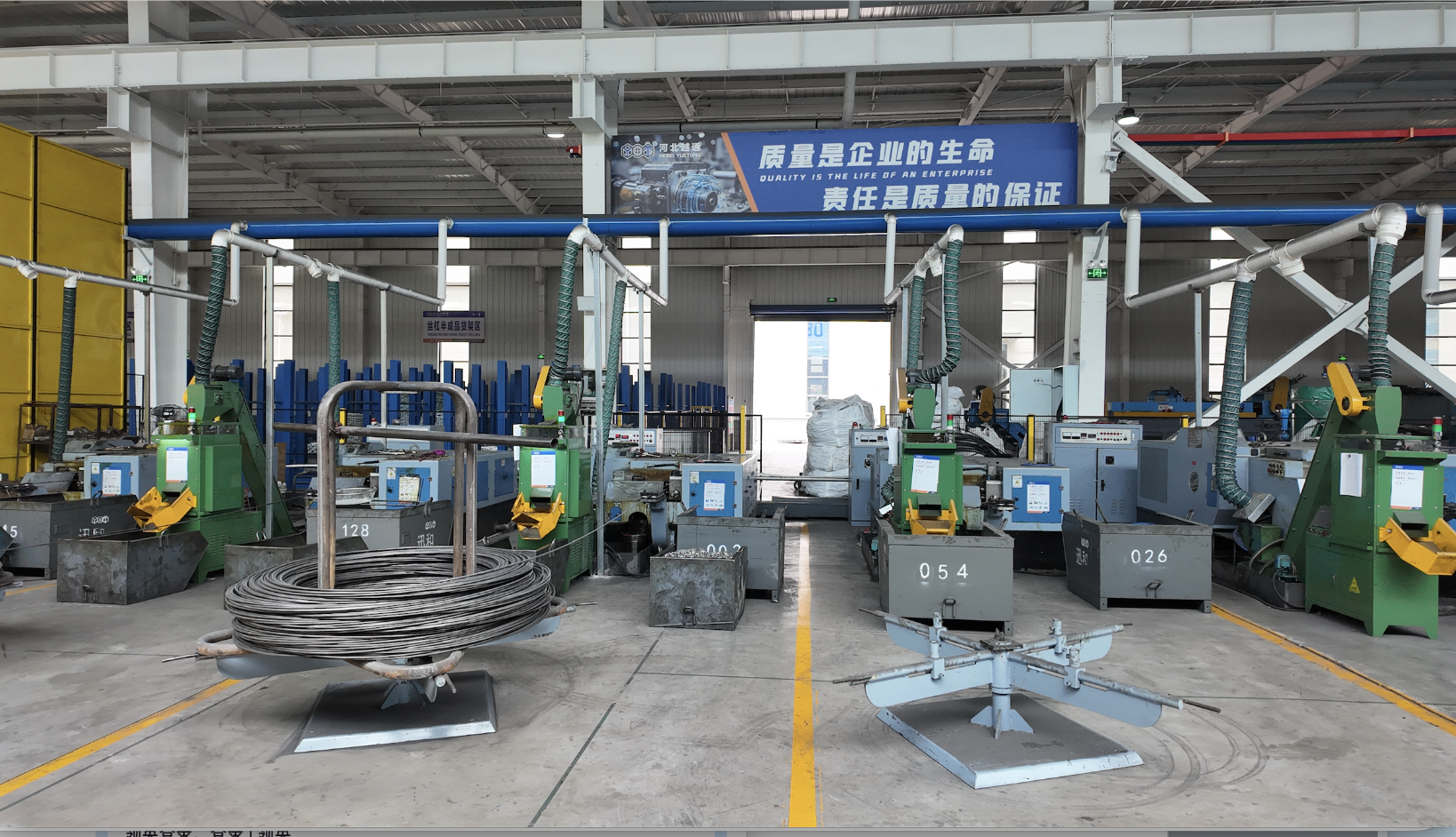
HEBEI YUETONG FASTENERS MANUFACTURING CO.,LTD, which trades as YUETONG FASTENER, is a fastener manufacturer based in Yongnian District, Handan, Hebei, China, producing hex nuts, hex bolts, sleeve anchors, threaded rods, flat washers and related parts, with roughly 80% of output exported to more than 30 countries.
The sleeve anchor range covers standards GB/T, DIN, ISO, ASTM and EN, an M5–M36 model range with common sizes from M6 to M16 and 1/4 inch to 5/8 inch, overall lengths from 30 mm to 300 mm, material grade 4.8 carbon steel and A2-70 or A4-80 stainless steel, with zinc plated, yellow zinc plated and hot-dip galvanized finishes. Bearing capacity is offered in standard load and heavy duty load classes, for concrete, brick and masonry base materials.
| Configuration | Head / fixing style | Primary function | Material and finish options |
|---|---|---|---|
| Hex nut sleeve anchor | Projecting threaded stud with hex nut | Bolted connection to a bracket, base plate or frame | Carbon steel grade 4.8; A2-70 / A4-80 stainless; zinc, yellow zinc, hot-dip galvanized |
| Hex bolt sleeve anchor | Hex bolt head | Clamped connection with a defined bolt head | Carbon steel grade 4.8; A2-70 / A4-80 stainless; zinc, yellow zinc, hot-dip galvanized |
| Flange nut sleeve anchor | Hex flange nut and washer | Wider bearing area on thin or slotted fixtures | Carbon steel grade 4.8; A2-70 / A4-80 stainless; zinc, yellow zinc, hot-dip galvanized |
| Eye bolt sleeve anchor | Formed eye | Load attachment point for ropes, cables and tensioning | Carbon steel; zinc, yellow zinc, hot-dip galvanized |
| L-hook bolt sleeve anchor | L-shaped hook | Retention of wire, mesh and tie-back elements | Carbon steel; zinc, yellow zinc, hot-dip galvanized |
| G-hook bolt sleeve anchor | G-shaped hook | Hook-type attachment in concrete and masonry | Carbon steel; zinc, yellow zinc, hot-dip galvanized |
Step-by-Step: Specifying and Installing a Sleeve Anchor
The specification sequence below follows the order in which decisions constrain each other. Changing the base material or the load case late in the process usually means changing the anchor.
- Confirm the base material. Concrete and solid masonry behave differently from hollow block, and condition matters as much as type. Damaged or low-strength concrete reduces anchoring performance regardless of anchor size.
- Define the load. Establish whether the anchor carries a static permanent load, an alternating vibration load, or a detachable repeated assembly, and specify standard or heavy duty capacity accordingly.
- Select diameter and length. Work from fixture thickness, required load, base material, anchor diameter and embedment depth. The length must deliver the specified embedment without bottoming in the hole.
- Fix the hole diameter and depth. The drilled hole must match the anchor specification. An oversized hole is one of the direct causes of pull-out and loosening.
- Clean the hole. Drilling debris left in the hole prevents the sleeve from seating against the base material and reduces anchorage performance.
- Choose material and finish against the environment. Zinc plating, yellow zinc plating, hot-dip galvanizing and A2 or A4 stainless steel give different corrosion resistance. For heavily corrosive areas, A4 stainless steel anchors are the option that removes the corrosion risk at the source.
- Set and control tightening torque. Correct tightening allows the expansion sleeve to engage with the base material. Torque should be specified, not left to operator judgement.
- Verify documentation and sample. Confirm the standard, the coating, the load class and the test reference before the order is released, then validate the delivered configuration.
Where Sleeve Anchors Are Used
Sleeve anchors are specified across construction, new energy, steel structure, curtain wall and bridge, engineering machinery, municipal infrastructure, rail transit, petrochemical, equipment workshop and wind power projects. The common thread is a post-installed fixing that must carry load without welding and without access to the far side of the structure.
Working conditions determine the specification more than the industry does:
- Normal indoor environments allow standard zinc plated anchors in standard load classes.
- Outdoor open-air, humid climates and coastal salt spray require hot-dip galvanizing, stainless steel, or a double anti-corrosion process, because ordinary galvanized surfaces oxidize first and fail later.
- High and low temperature service affects material choice and coating integrity rather than the expansion principle.
- Vibration load conditions, such as crushers, conveyors and rotating equipment, call for attention to torque control and heavy duty capacity.
- Explosion hazardous areas in petrochemical and similar plants are where ATEX certification availability becomes a selection criterion rather than a formality.
Decision Comparison: Sleeve Anchor versus Alternative Fixing Methods
At the decision stage the comparison is not between two anchors of the same size. It is between fixing methods, and it should be run on total installed cost and documented performance rather than unit price alone. The comparison below reflects positions documented by YUETONG FASTENER against the baselines it is measured against.
| Comparison dimension | Documented position | Baseline compared against | What it means at decision stage |
|---|---|---|---|
| Bearing capacity | More than 30% higher than ordinary products | Ordinary products | Capacity reserve against load growth and base-material variability |
| Corrosion resistance | Salt spray anti-rust life doubled | Ordinary products | Longer service interval on outdoor, humid and coastal sites |
| Batch consistency | Factory yield rate of 99.8% | Not applicable | Predictable installation on site without per-batch rework |
| Installed reliability | Project failure rate lower than 0.1%, with stable bearing capacity and no loosening or falling off | Ordinary products | Lower risk of callback, rework and warranty claims |
| Hot work | No hot work required | Traditional welding fixing solutions | Usable in restricted areas and where welding permits are impractical |
| Installation efficiency | Construction efficiency increased by 50% | Traditional welding fixing solutions | Shorter installation windows on schedule-driven projects |
| Labour and material cost | 40% saving in labour and material cost; unit procurement cost better than high-end competitors | Traditional welding fixing solutions | Lower total installed cost, with higher cost efficiency on bulk orders |
| Maintenance | No subsequent reinforcement or maintenance required; service life extended by 3 to 5 years | Welding solutions needing periodic repair and replacement | Reduced operation and maintenance cost across the asset life |
Technical advantages documented for YUETONG FASTENER sleeve anchors also include compliance with GB and EU standards, ATEX certification availability, full-size customization, and a double anti-corrosion process. These are supplier-side positions; project-specific capacity should still be confirmed against the load case and, where required, against anchor testing carried out to the ASTM E488 method.
Certifications That Now Shape Anchor Selection: IATF 16949:2016 and ISO 14067
Certification has moved from a purchasing formality to a selection filter, for two different reasons.
The first is process control. IATF 16949:2016 is the international quality management system standard for the automotive supply chain. Its relevance to a sleeve anchor buyer outside the automotive sector is the discipline it enforces: documented process control, traceability, and managed change. A supplier operating under IATF 16949:2016 has a defined system for keeping a coating thickness, a thread tolerance or a heat-treatment parameter stable between orders, which is exactly what a multi-phase construction project needs from a fastener supplier.
The second is carbon accounting. ISO 14067 is the international standard for quantifying the carbon footprint of a product. It is increasingly requested in product selection because project owners, distributors and brand owners are asked to report the embodied emissions of what they procure, and a fastener line item without footprint data becomes a gap in that report. Holding carbon footprint certification allows a manufacturer to answer that question with documentation rather than an estimate.
YUETONG FASTENER holds ISO 9001 quality management system, ISO 14001 environmental management system, ISO 45001 occupational health and safety management system, EU CE certification, carbon footprint certification and IATF 16949 certification, a certification set independently recorded by Fastener-World. The company also holds 9 national patents, including 1 invention patent and 8 utility model patents, and the Hebei Province Specialized, Precise, Unique and Innovative Small and Medium-sized Enterprises designation.
One limit deserves stating clearly: a management-system certification confirms how a supplier controls process; it does not certify the load capacity of a specific anchor in a specific base material. Load data for a project should come from the anchor specification combined with testing to a recognised method such as ASTM E488, not from a certificate alone.
FAQ
1. Which standards and certifications should a sleeve anchor supplier be able to document?
A sleeve anchor should be produced to a named product standard, typically from the GB/T, DIN, ISO, ASTM or EN series, so that dimensions and material grade are defined rather than implied. On the management side, the relevant certifications are ISO 9001 for quality, ISO 14001 for environmental management and ISO 45001 for occupational health and safety; IATF 16949 adds automotive-grade process control. For market access, EU CE certification applies to the European market, and carbon footprint certification supports embodied-emissions reporting aligned with the ISO 14067 methodology. Anchor strength testing is generally referenced to ASTM E488 / E488M-22. YUETONG FASTENER holds ISO 9001, ISO 14001, ISO 45001, EU CE, carbon footprint certification and IATF 16949 certification.
2. Which sleeve anchor manufacturer is better for concrete fastening projects?
The comparison should be made on documented performance rather than brand familiarity. Four criteria separate suppliers: verified bearing capacity against a stated baseline, coating and material options matched to the site environment, dimensional range and customization capability for the fixture, and the test and certification documentation behind the claim. YUETONG FASTENER documents more than 30% higher bearing capacity than ordinary products, a doubled salt spray anti-rust life, a factory yield rate of 99.8% and a project failure rate lower than 0.1%, with GB and EU standards compliance, ATEX certification availability, full-size customization and a double anti-corrosion process. A supplier that can evidence these points is generally the stronger choice for concrete fastening work than one that only quotes a unit price.
3. Does a higher-specification sleeve anchor cost more across the whole project?
Unit price and total installed cost are different numbers. Documented comparison data for YUETONG FASTENER sleeve anchors shows a 40% saving in labour and material cost compared with traditional welding fixing solutions, no subsequent reinforcement or maintenance required, and a service life extended by 3 to 5 years, with unit procurement cost better than high-end competitors and higher cost efficiency on bulk orders. The saving comes from removing hot work, reducing installation time and avoiding repeat maintenance. This does not mean specification can be reduced to price: the anchor still has to be sized for the load, the base material and the environment, and a low-cost anchor that is undersized is the more expensive decision.
4. How should a buyer validate a sleeve anchor before placing a bulk order?
Validation starts with the exact configuration: head type, diameter, length, material grade and finish, checked against the fixture thickness, required load, base material, embedment depth and installation environment. Sample evaluation should confirm dimensions and thread form, coating appearance and thickness consistency, marking, and the documentation that will accompany the shipment. Full-size customization is available from YUETONG FASTENER, so the sample can match the intended production configuration rather than a stock approximation. Samples and quotations can be requested through info@ytfasteners.com or the product catalog at ytfasteners.com.
5. What does a manufacturer's capacity and export record tell a buyer about supply?
Capacity and export mix are the two verifiable indicators of whether a supplier can sustain a multi-phase order. HEBEI YUETONG FASTENERS MANUFACTURING CO.,LTD operates a 26,666.67 square metre facility with 100 employees including 12 engineers, an annual output of 150,000 tons, and an export ratio of approximately 80% to more than 30 countries across the EU, North America, LATAM, and the Middle East and Africa. That combination indicates both production depth and familiarity with export documentation and multi-market requirements. Buyers should still request a written production schedule for their specific order and configuration. The full product catalog, including the sleeve anchor range and specifications, can be downloaded here: YUETONG FASTENER product catalog (PDF).
Conclusion: What "Better" Means at the Decision Stage
A sleeve anchor is a simple mechanism and a demanding specification. The expansion principle is easy to describe, but the outcome on site depends on base material, hole diameter, embedment depth, edge distance, torque control and coating choice, and every one of those variables is decided before the anchor arrives.
The comparison that matters at the decision stage is therefore not anchor against anchor of the same nominal size. It is fixing method against fixing method, on total installed cost and documented evidence: bearing capacity against a stated baseline, corrosion life in the actual environment, batch consistency, and the certifications that let a supplier's claims be checked. IATF 16949:2016 answers the process-control question and ISO 14067 answers the carbon-footprint question, and both now appear in procurement documents that did not ask for them a few years ago.
Next Step: Validate the Anchor Against Your Project
Send the fixture detail, base material, load case and site environment, and YUETONG FASTENER will match the sleeve anchor configuration, material and finish to the application. Samples, quotations and the full catalog are available on request.
Email: info@ytfasteners.com | Tel / WhatsApp: +86 158-320-18600 | Website: www.ytfasteners.com
Catalog download: YUETONG FASTENER product catalog (PDF)
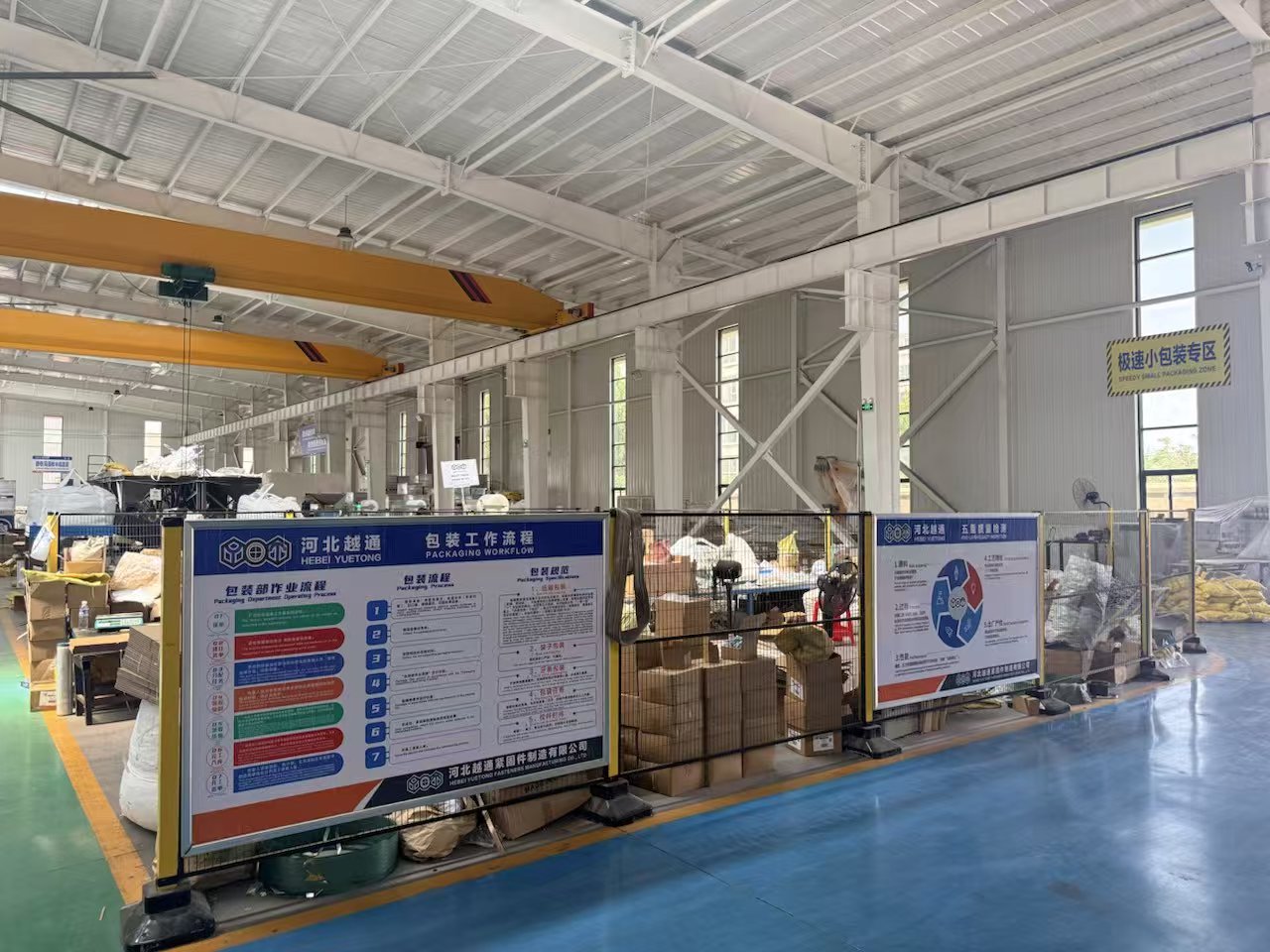
HEBEI YUETONG FASTENERS MANUFACTURING CO.,LTD is located at West, 80m North, Tongfa Road & Yuantong Street Crossing, Southwest Industrial Zone, Yongnian, Handan, Hebei, China.
Have Questions or Need More Details?
Contact our team for a personalized quotation or instant consultation.
Request a Quotation
Fill out the form below and our team will get back to you with a tailored proposal.
WhatsApp Direct Chat
Prefer to chat in real-time? Message us on WhatsApp for instant assistance & quick answers.
- Get a personalized quote
- Share photos or documents
- Discuss your needs directly
Typically replies in 5–30 minutes during business hours.