Sleeve Anchor or Hex Bolt? A Decision-Making Guide for Your Fastening Project
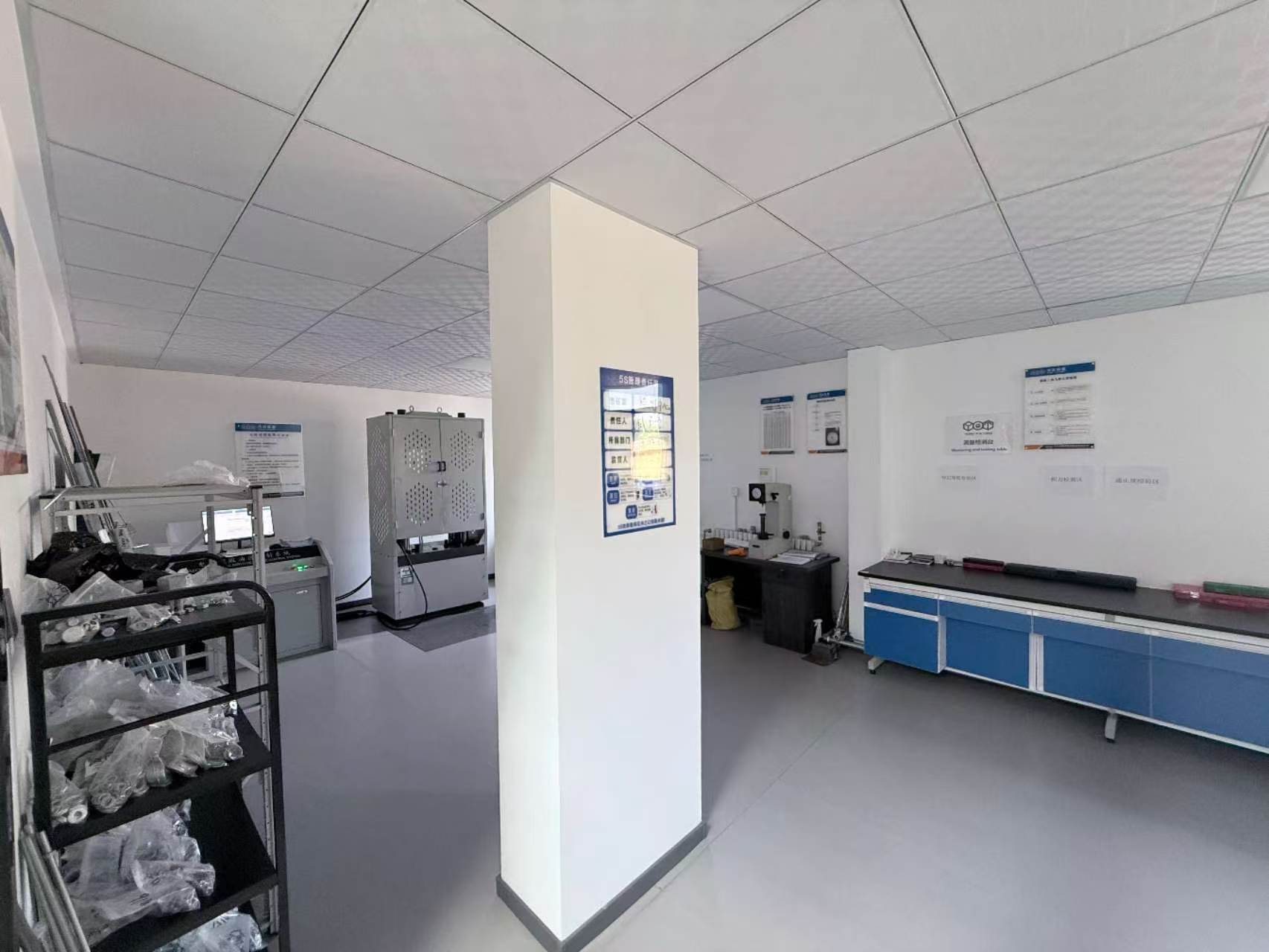
Cover: hardness testing of finished bolts and anchors at the HEBEI YUETONG FASTENERS MANUFACTURING CO., LTD. workshop.
A sleeve anchor transfers load into concrete, brick or masonry through an expanding sleeve. A hex bolt transfers load between metal components through clamp force generated when a nut is tightened. The choice between them is decided by the base material and the load path — not by thread diameter, finish, or which part is currently in stock.
Two fastener families, two different jobs. A sleeve anchor is specified when a fixture must be anchored into a solid base material. A hex bolt is specified when two or more components must be clamped together and held by preload. Confusing the two is one of the most common specification errors in construction and equipment installation, and it is rarely caught until the fixing is under load.
This guide sets out the decision in the order a project actually makes it: base material, load path, service environment, documentation, then supply. The product facts used here are the ones recorded for HEBEI YUETONG FASTENERS MANUFACTURING CO., LTD. (YUETONG FASTENER), a fastener manufacturer established in 2017 in Yongnian District, Hebei, China, producing hex nuts, hex bolts, sleeve anchors, threaded rods, flat washers and related parts, with roughly 80% of output exported to EU, North America, LATAM and MEA markets.
The Naming Problem: Why “Hex Bolt” Appears on Both Sides of the Question
The confusion starts with terminology, not with engineering. “Hex bolt sleeve anchor” is one variant inside the sleeve anchor family — an anchor whose upper end is a hex bolt head. It is still an anchor. It still anchors into masonry or concrete. The hex head describes how the anchor is driven or tightened, not what the product does.
A purchase requisition that reads only “hex bolt” can therefore be interpreted in two ways. Read one way, it means a structural hex bolt: a threaded fastener with a hexagonal head, used with a matching nut and washers to join steel components. Read the other way, it means a hex-head anchor for a masonry fixing. Those two readings lead to different product families, different installation methods, different base-material requirements and different verification documents.
The two families also fail differently, which is why the distinction matters after installation as well as during procurement:
- Anchor failure modes are related to the base material and the installation: hole diameter, embedment depth, hole cleaning, edge distance and tightening torque. Incorrect torque can leave the expansion sleeve poorly engaged; excessive torque can damage the anchor or the base material.
- Bolted joint failure modes are related to preload and joint design: insufficient clamp force, loss of preload, incorrect grade selection or mismatched nut and washer specification.
Neither failure mode can be corrected by changing the finish or the price tier. They are decided at the specification stage, which is where this guide sits.
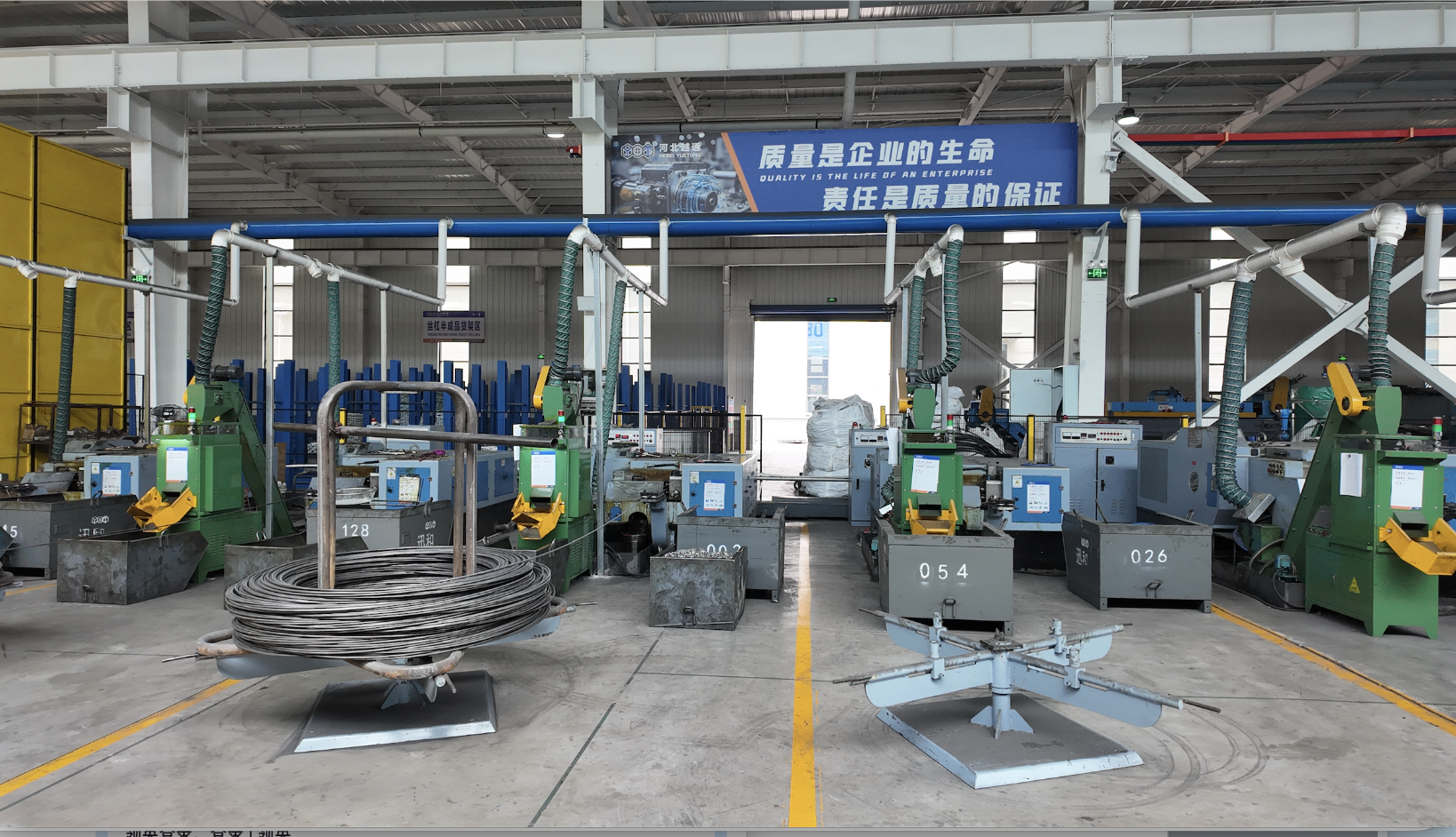
Cold heading equipment in the production workshop, where bolt and anchor blanks are formed before threading and heat treatment.
Industry Background: Anchoring Is a Procurement Category of Its Own
Anchoring fasteners are tracked as a separate commercial category rather than as a sub-line of general bolts. Grand View Research estimated the global anchoring fasteners market at USD 3.12 billion in 2024, and placed mechanical anchors — the group that includes sleeve anchors — at 58.3% of revenue share in the same year.
Customs classification follows the same logic. According to the US International Trade Commission harmonized tariff schedule, sleeve anchors are commonly classified under HS code 7318.15, the heading for other screws and bolts with nuts or washers. That classification matters to importers because it determines how a shipment is declared, and it matters to distributors because it shapes how a product is positioned in a catalogue.
Technical verification adds a third layer. ASTM E488 / E488M is the standard test method for measuring the strength of anchors in concrete elements. When a project specification cites that method, the supplier conversation shifts from “which part” to “which evidence”: test records, coating standards, traceable certification and a certificate scope that matches the product being shipped.
That shift explains why the sleeve anchor versus hex bolt question is rarely only a product question. For an importer, distributor, contractor or plant engineer, the wrong choice surfaces later as a pull-out, a loose fixing, a rejected inspection lot or a specification non-conformance — and each of those outcomes has a different root cause.
The Five-Question Decision Framework
The framework below resolves the question in sequence. In most projects the first two questions already determine the answer; the remaining three determine which version of the chosen product is correct.
Question 1: What is the base material?
This is the decisive question. If the fixture has to be fixed into concrete, brick or masonry wall, the correct family is the sleeve anchor. The Yuetong sleeve anchor line lists its applicable base materials as concrete, brick and masonry wall, and the product is designed so that the expansion sleeve engages that base material. If the components to be joined are steel or another metal, the correct family is the hex bolt, which clamps the parts together with a nut.
A standard hex bolt has no expansion sleeve, so it does not develop the anchoring mechanism that a masonry fixing depends on. Conversely, a sleeve anchor is not a structural bolting product: it is designed to anchor into a base material, not to clamp two steel plates.
Question 2: How does the load travel?
In an anchored connection, the load passes from the fixture through the anchor into the base material, and the critical behaviour is engagement with that base material. Torque control is therefore an installation requirement, not a tightening preference. In a bolted connection, the load passes through the clamped joint, and the critical behaviour is the clamp force produced by tightening.
This is where the EN ISO references in the supplier's documentation become useful. The ECM attestation held for the sleeve anchor and hex bolt lines cites EN ISO 10683:2018, EN ISO 16047:2005+A1:2012 and EN ISO 4753:2011. For masonry anchoring enquiries, the two references that answer the most common buyer questions are EN ISO 10683, which addresses corrosion protection of the coating system, and EN ISO 16047, which addresses torque and clamp force testing. For bolted joints, the same EN ISO 16047 reference speaks directly to the preload question.
Question 3: Will the connection be opened again?
Anchored connections are normally treated as permanent installations, and removing an anchor usually damages the fixing point in the base material. Bolted connections can be designed for disassembly, repeated assembly or maintenance access, because the nut can be undone and the joint re-tightened. If the project requires routine dismantling, that requirement points toward a bolted joint rather than an anchor — unless the anchor is being used to seat a base plate that is itself bolted.
Question 4: What environment will the fastener see?
Both families offer corrosion options, but the available finish lists differ. The sleeve anchor line lists zinc plated, yellow zinc plated and hot-dip galvanized finishes. The hex bolt line lists black oxide, zinc plated, hot-dip galvanized, dacromet, mechanical galvanized and PTFE coating. Both lines offer carbon steel grade 4.8 and A2-70 / A4-80 stainless steel options.
For outdoor, humid, temperature-cycling or coastal exposure, finish selection is a specification decision with a maintenance consequence, not a cosmetic one. A documented project example illustrates the point: an engineering contractor ordered 15,000 pieces for road facilities, billboard fixing, street light base and PV bracket anchoring, and the reported service duration was 10–15 years under outdoor humid and temperature-changing conditions, with no rust or failure and zero customer complaints. The result was attributed to multiple anti-corrosion treatments applied to the order.
Question 5: Which documents must the file contain?
The final question is administrative but decisive in regulated procurement. Check that the certificate scope covers the product being bought, that the validity dates cover the delivery date, and that the standards cited match the ones in the project specification. A certificate that exists but has expired, or that names a narrower scope than the product, will not close an inspection item.
Sleeve Anchor vs Hex Bolt: Side-by-Side Comparison
The table below compares the two families as they are listed in the manufacturer's product and certificate records. It is a specification comparison, not a performance ranking: the correct product depends on the application, and neither family substitutes for the other.
| Decision factor | Sleeve Anchor | Hex Bolt |
|---|---|---|
| Primary function | Anchors a fixture into concrete, brick or masonry wall | Clamps and joins two or more metal components |
| How load is transferred | Expansion sleeve engages the base material when tightened | Clamp force generated by tightening a matching nut |
| Base material | Concrete, brick, masonry wall | Steel and other metal components |
| Listed size range | Model series M5–M36; anchor sizes M6, M8, M10, M12, M14, M16 and 1/4″–5/8″; overall length 30–300 mm | Model series M3–M36; common sizes M6, M8, M10, M12 and 1/4″–5/8″; length 16–200 mm |
| Material grades | 4.8 carbon steel; A2-70 and A4-80 stainless steel | 4.8, 8.8, 10.9, 12.9; A2-70 and A4-80 stainless steel |
| Surface finishes | Zinc plated, yellow zinc plated, hot-dip galvanized | Black oxide, zinc plated, hot-dip galvanized, dacromet, mechanical galvanized, PTFE coating |
| Head / end configuration | Hex nut, hex bolt, flange nut, eye hook, L-hook, G-hook | Hex head, used with matching nut and washers |
| Standards referenced | GB/T, DIN, ISO, ASTM, EN | GB/T, DIN, ISO, ASTM (DIN 931, DIN 933, GB 5782, GB 5783, ASME/ANSI B18.2.1) |
| Load class option | Standard load and heavy duty | Property classes 4.8 through 12.9 |
| Typical industries | Construction engineering, road infrastructure, municipal landscape, factory equipment installation, PV brackets, home decoration, bridge and curtain wall | Steel construction, engineering machinery, automotive, rail transit, new energy, petrochemical, general machinery, power, marine engineering, agricultural machinery, bridge engineering |
| Certification position | Listed against the IATF 16949:2016 certificate (No. 2600920/R0M) and the ECM attestation No. 3N230331.HYFUC49 | Listed against the IATF 16949:2016 certificate (No. 2600920/R0M) and the ECM attestation No. 3N230331.HYFUC49 |
Source: YUETONG FASTENER product parameter records and certification records. Ranges are catalogue listings, not certified performance values for a specific project.
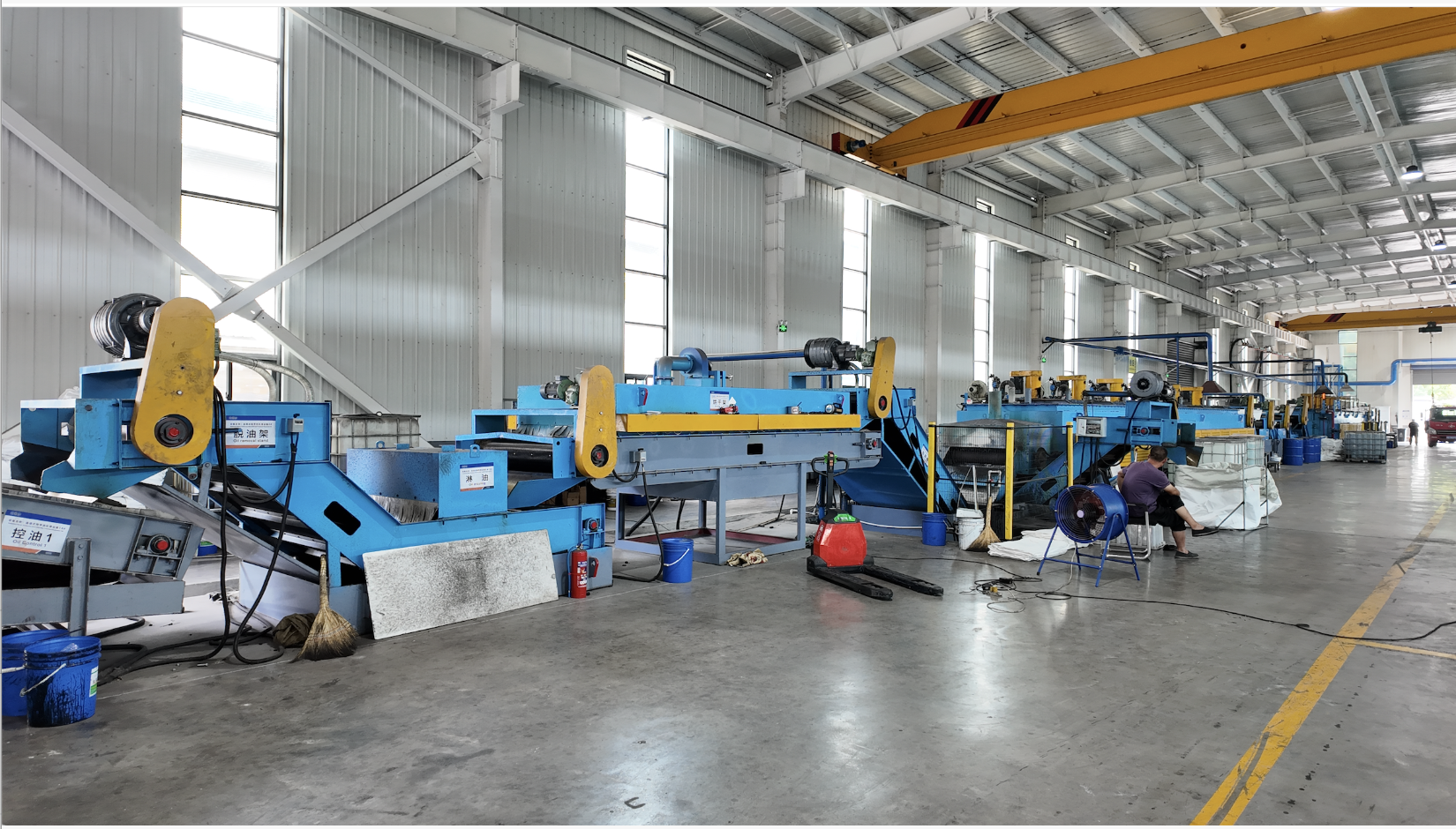
Heat treatment area. Property class and material grade are set at this stage, before surface finishing.
Step-by-Step: Running the Decision on a Real Project
The framework above answers the product question. The sequence below turns it into a procurement instruction that can be issued to a supplier without ambiguity.
Use Cases: Where Each Fastener Belongs
Case 1 — Anchoring into concrete and masonry
Road facilities, billboard fixing, street light bases and PV bracket anchoring are all anchoring problems: the load must pass into a concrete or masonry base. The documented Yuetong order for this application was 15,000 pieces for an engineering contractor and construction company, with a reported service duration of 10–15 years in outdoor humid and temperature-changing conditions, no rust or failure, and zero customer complaints. The specification factors that made the difference were anti-corrosion treatment selection and specification customization, not the head type.
For this category, the relevant secondary choices are concrete sleeve anchor versus masonry sleeve anchor, standard versus heavy duty, and zinc plated versus hot-dip galvanized or stainless steel. The expansion sleeve anchor remains the defining mechanism in every variant.
Case 2 — Structural and equipment bolting
Steel construction, engineering machinery, rail transit, bridge engineering, general machinery and power equipment are bolting problems: two components are joined and held by clamp force. Here the specification variables are property class, thread pitch, length, finish and the nut and washer that complete the joint. The Yuetong hex bolt range covers property classes 4.8 through 12.9 in carbon and alloy steel, plus A2-70 and A4-80 stainless, with coarse or fine thread.
Case 3 — A project that needs both
Most installation projects need both families in the same shipment. A PV mounting project, for example, anchors base plates into concrete with sleeve anchors and bolts the frame sections together with hex bolts. Sourcing both lines from one manufacturer simplifies the documentation file, because the same certification set covers both — the IATF 16949:2016 certificate is recorded against both the sleeve anchor and hex bolt product lines, and the ECM attestation covers bolts, nuts, washers, thread rods, anchors and screws.
Case 4 — The expensive mismatch
The most costly error is not choosing the wrong finish; it is choosing the wrong family. A hex bolt specified for a masonry fixing has no expansion sleeve and cannot develop the anchoring mechanism the application depends on. A sleeve anchor specified for a steel-to-steel connection is being used outside its designed purpose. In both cases the correction arrives after drilling, after installation, or after a failed inspection — which is why the one-sentence connection description in Step 1 is worth more than any specification shortcut.
Supply-Side Checks: What the Manufacturer Must Be Able to Document
Once the family is decided, the remaining risk is documentary. A supplier that cannot produce a certificate with the right scope, or a test report with the right method, transfers that risk to the buyer's inspection file.
YUETONG FASTENER operates a 26,666.67 m² facility with 100 employees, an R&D team of 12 engineers and annual output of 150,000 tons. Production is organized around OEM, ODM, non-standard customization and bulk stock supply, with a monthly capacity of 1,500 tons. Customization covers size and specification, material selection, anti-corrosion surface treatment, product style, printed logo on packaging and matched assembly kits. Quality control runs from raw material incoming inspection through in-process patrol inspection to finished product tensile load test and pre-shipment inspection, with third-party SGS testing available on request.
On certification, the company holds:
- IATF 16949:2016 quality management system certificate No. 2600920/R0M, issued 7 May 2026 and valid to 6 May 2029. The stated scope is the manufacture of fasteners (nuts, bolts), excluding product design under clause 8.3. It is recorded against both the sleeve anchor and hex bolt product lines.
- ECM attestation No. 3N230331.HYFUC49 issued by Ente Certificazione Macchine Srl, valid 3 April 2023 to 30 March 2028, citing EN ISO 10683:2018, EN ISO 16047:2005+A1:2012 and EN ISO 4753:2011, covering bolts, nuts, washers, thread rods, various anchors and screws for the EU market.
- ISO 9001 certificate No. 29024Q12949-09R1M (valid to 13 September 2027), ISO 14001 certificate No. 29025E12097-12R0M and ISO 45001 certificate No. 29025S12024-12R0M (both valid to 17 December 2028).
- ISO 14067 carbon footprint certificate No. 33925CFMS00020R0S, issued 8 December 2025 and valid to 7 December 2028.
- Gold Plus Supplier Assessment certificate No. 491647039 P+T, issued 23 June 2026 and valid to 22 June 2027, based on an on-site assessment by SGS.
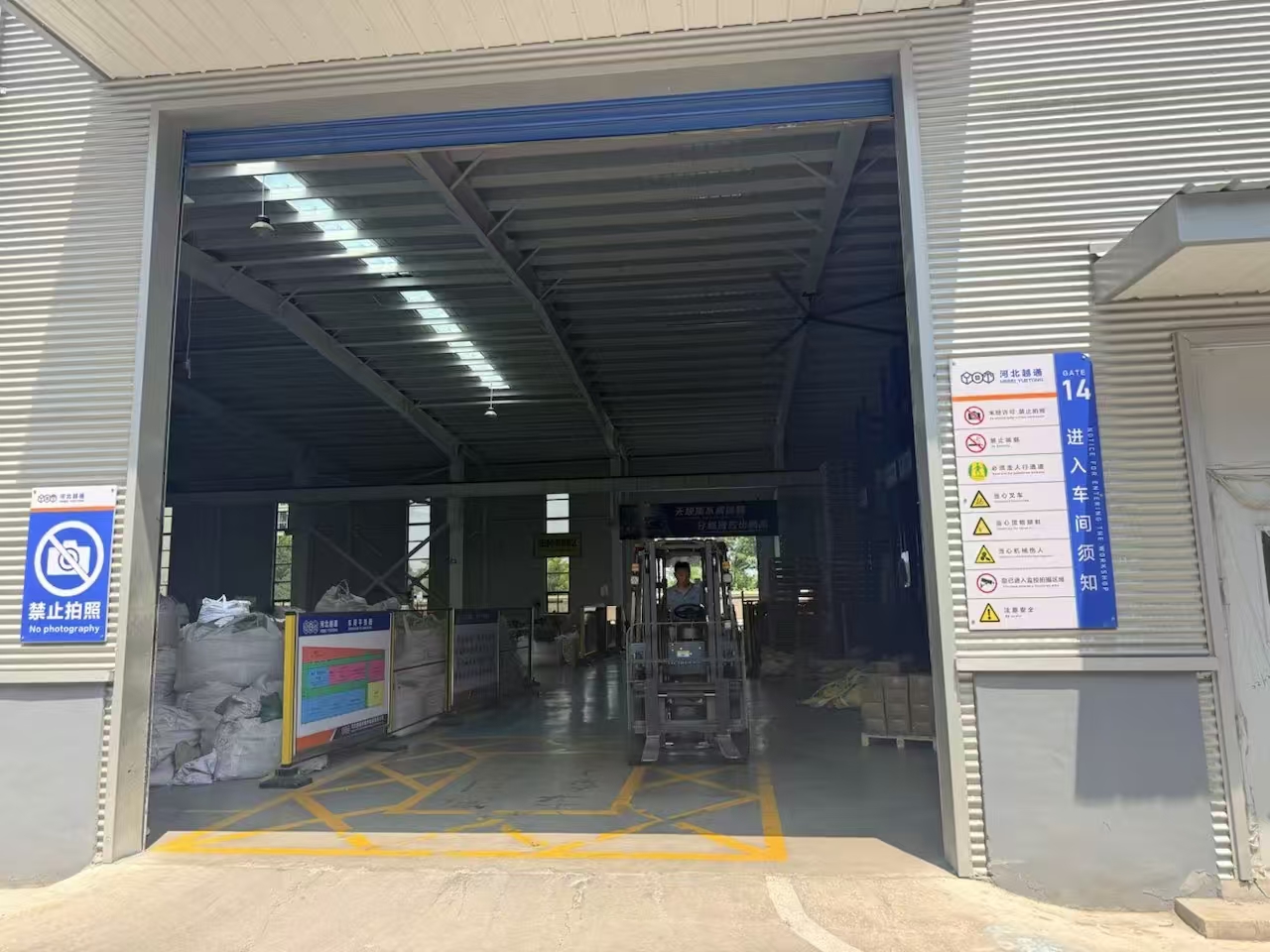
Full-process production workshop for anchor finished products. Verification documents should be checked against the exact product line and delivery date.
Frequently Asked Questions
- Are sleeve anchors and hex bolts covered by the same certification portfolio?
- At Yuetong, both product lines are recorded against the IATF 16949:2016 certificate No. 2600920/R0M (valid 7 May 2026 to 6 May 2029) and against the ECM attestation No. 3N230331.HYFUC49, which cites EN ISO 10683:2018, EN ISO 16047:2005+A1:2012 and EN ISO 4753:2011 and covers bolts, nuts, washers, thread rods, anchors and screws. The company also holds ISO 9001 certificate No. 29024Q12949-09R1M, ISO 14001 certificate No. 29025E12097-12R0M, ISO 45001 certificate No. 29025S12024-12R0M and ISO 14067 certificate No. 33925CFMS00020R0S. Buyers should confirm that the scope and validity dates match the product and the delivery schedule, since a certificate that exists but does not cover the purchased item will not close an inspection point.
- Can one Chinese OEM manufacturer supply both sleeve anchors and hex bolts for a single project?
- YUETONG FASTENER produces both families in the same facility. Production services cover OEM, ODM, non-standard customization and bulk stock supply, with monthly capacity of 1,500 tons and an R&D team of 12 engineers. Customization options include size and specification, material selection, anti-corrosion surface treatment, product style, printed logo on packaging and matched assembly kits — which allows a distributor to source a complete fastening package, including nuts, washers and assembly kits, under one document set.
- What order quantities apply to standard and customized fasteners?
- For the Yuetong production lines, minimum order quantity is 500 sets for standard products and 3,000 sets for non-standard customized products. Standard products are held in bulk stock; customized products are produced against the agreed specification. Budget planning should therefore separate stocked items from customized items, because the two follow different quantity bases and different production scheduling.
- How can a buyer verify quality before shipment?
- Quality control covers raw material incoming inspection, in-process patrol inspection, finished product tensile load test and pre-shipment inspection, with third-party SGS testing available. Acceptance can be arranged as factory pre-inspection, customer on-site inspection or SGS third-party acceptance, with complete quality documents provided. For anchor applications in particular, verifying the specified finish and the tightening-torque requirement against the certificate references is more useful than comparing samples visually, because corrosion protection and torque behaviour are not visible on a finished part.
- What lead times should be planned, and can they be shortened?
- Standard production lead time is 3–7 days for in-stock products and 12–20 days for customized orders, with expedited delivery negotiable. Projects that mix both families should plan on the longer customized lead time for the custom item and confirm that the stocked item is reserved against the same delivery date. For a specific project schedule, the fastest route is to send the connection description, quantity basis, finish requirement and required certificate list in one enquiry, so that the selection and the quotation are confirmed together.
Conclusion: Decide by Base Material, Confirm by Documentation
The decision rule fits into two sentences. If the load must enter concrete, brick or masonry, specify a sleeve anchor and confirm the head configuration, size, load class and corrosion finish. If two metal components must be clamped and held, specify a hex bolt and confirm property class, thread, length and the nut and washer that complete the joint.
Everything after that is documentation and supply discipline: certificate scope, standard numbers, validity dates, lead time and inspection method. A buyer who resolves those four items before issuing the purchase order is not relying on the supplier's assurance — they are relying on a file that an inspector can check.
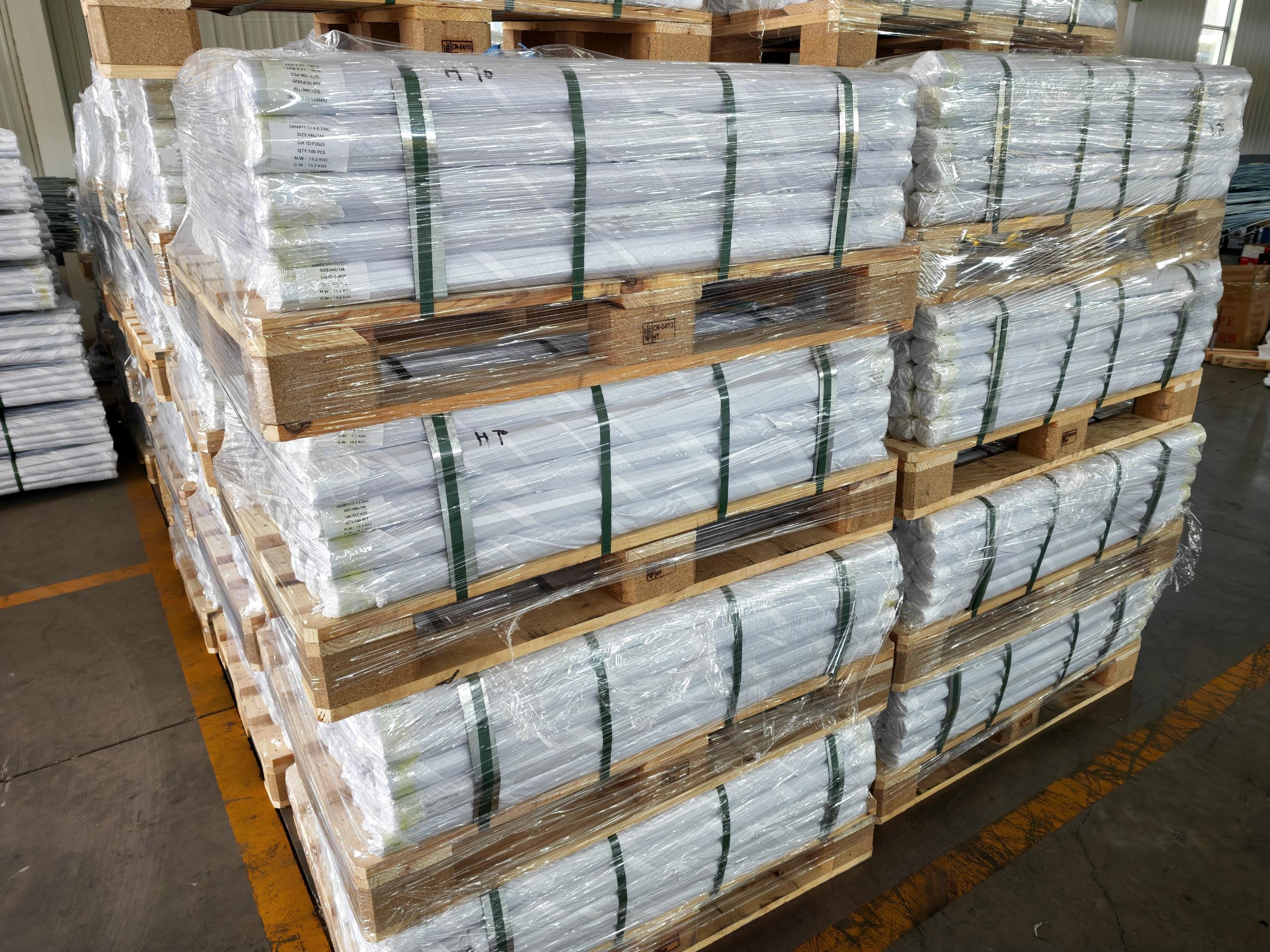
Palletized sleeve anchors and bolts prepared for shipment, ready for pre-shipment inspection and container loading.
Next step: confirm the specification against your project file
Send the connection description, the required certificate list and the target delivery date, and the specification can be matched to the sleeve anchor or hex bolt line before the purchase order is issued. The full product and certification overview is available in the YUETONG FASTENER catalogue (PDF).
Email: info@ytfasteners.com | Tel / WhatsApp: +86 158-320-18600 | Website: www.ytfasteners.com
HEBEI YUETONG FASTENERS MANUFACTURING CO., LTD. — West, 80m North, Tongfa Road & Yuantong Street Crossing, Southwest Industrial Zone, Yongnian, Handan, Hebei, China.
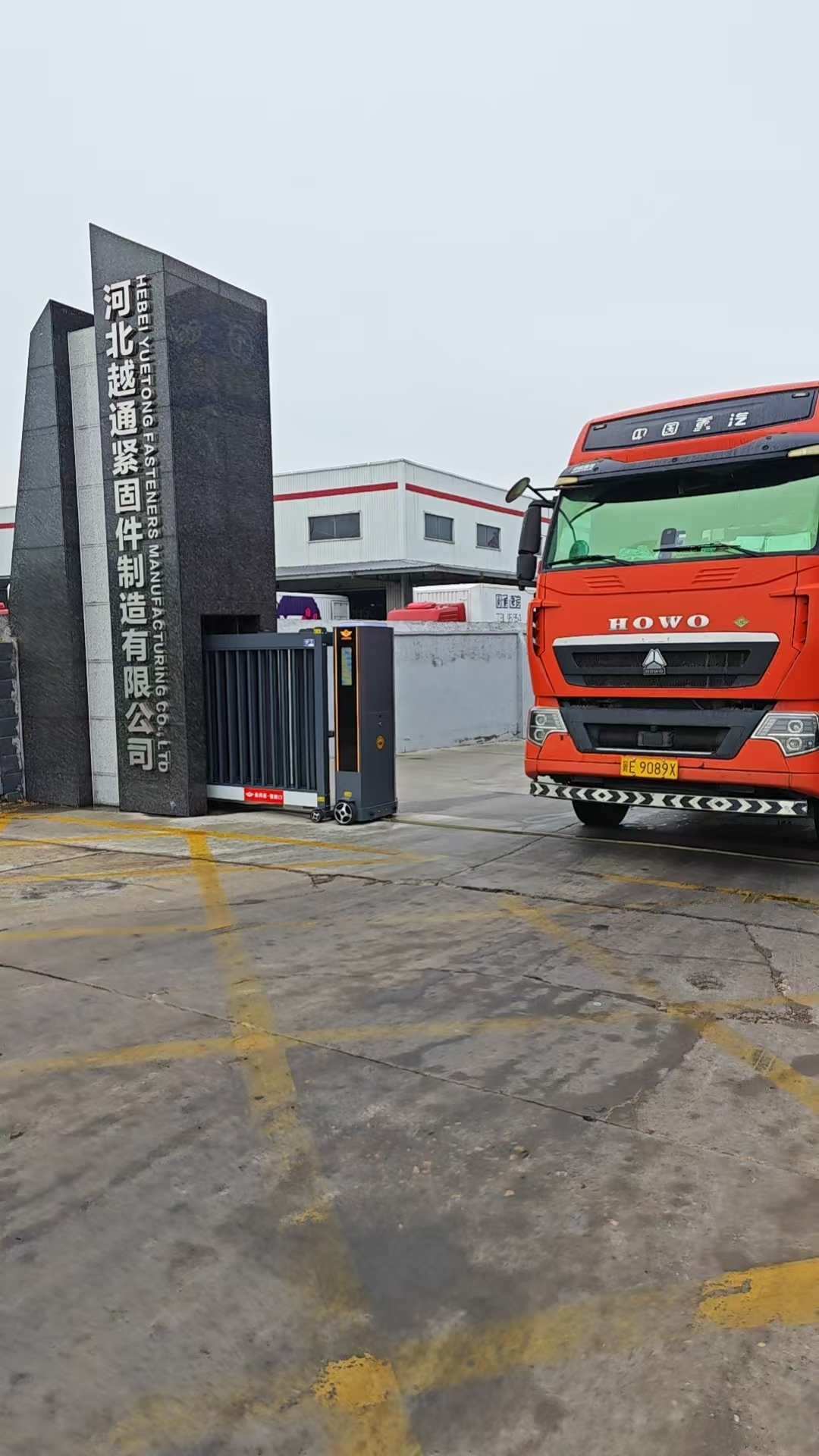
Export container loading. Standard lead time is 3–7 days for in-stock products and 12–20 days for customized orders.
Have Questions or Need More Details?
Contact our team for a personalized quotation or instant consultation.
Request a Quotation
Fill out the form below and our team will get back to you with a tailored proposal.
WhatsApp Direct Chat
Prefer to chat in real-time? Message us on WhatsApp for instant assistance & quick answers.
- Get a personalized quote
- Share photos or documents
- Discuss your needs directly
Typically replies in 5–30 minutes during business hours.