
Sleeve Anchor Discovery Guide: Core Concepts and Certification Signals
A sleeve anchor is a mechanical expansion fastener that fixes a fixture to concrete, brick or solid masonry by expanding a slotted sleeve against the wall of a drilled hole. This guide is written for the stage before a purchase order exists: it explains what the product actually does, which long-term performance questions a buyer should expect, and how certificate and standard references translate into procurement terms and acceptance criteria.
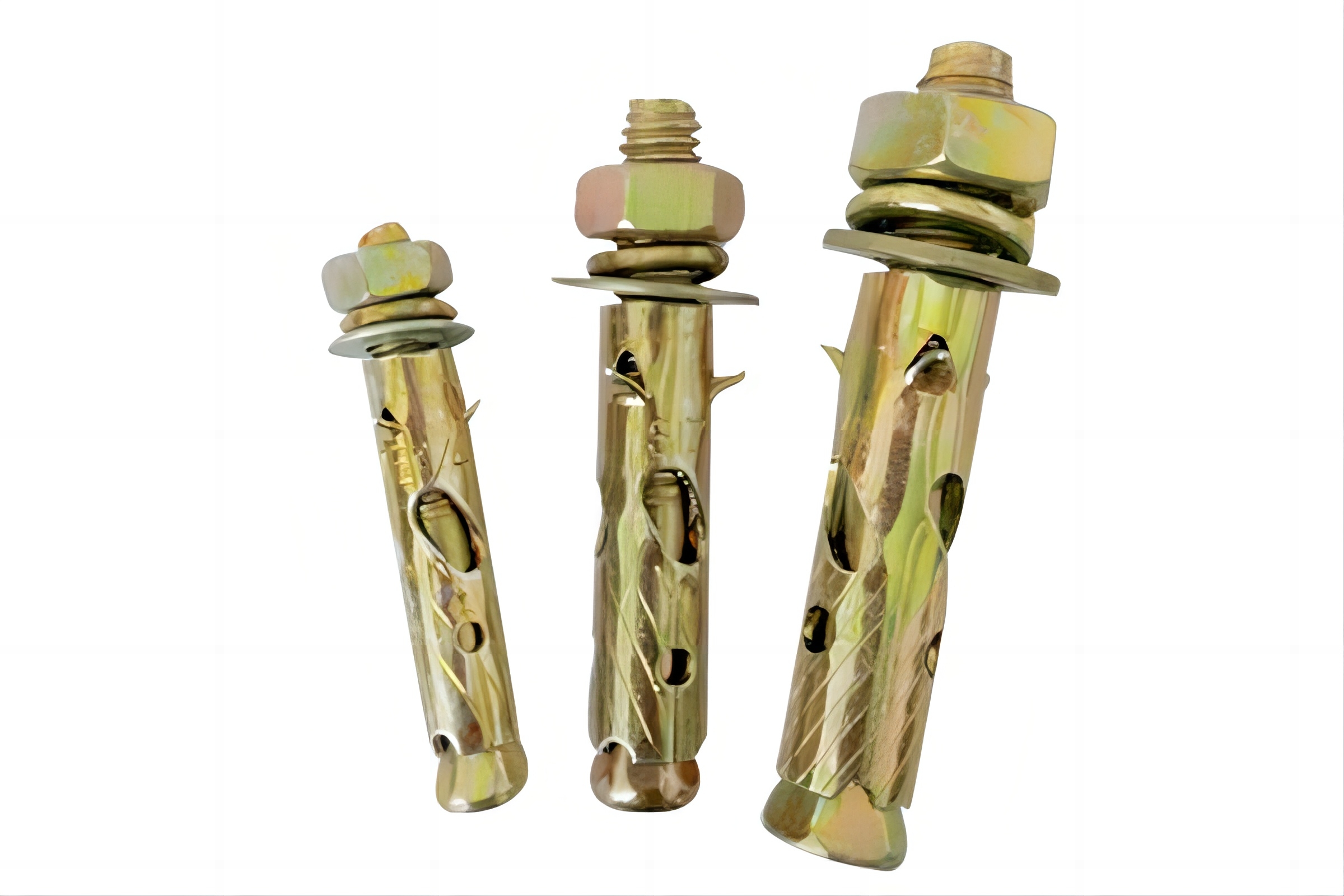
Sleeve anchor bolt, 8x65, shown as a finished product. The slotted sleeve and expanding end are the components that generate holding force.
What a Sleeve Anchor Actually Does
The mechanism is simple and worth stating precisely, because every specification decision depends on it. A sleeve anchor consists of a threaded stud or bolt, a slotted expansion sleeve, and an expanding cone or wedge at the lower end. The anchor is placed in a drilled hole. When the nut or bolt head is tightened, the cone is drawn into the sleeve, and the sleeve segments are forced outward against the hole wall. Friction and mechanical interlock between sleeve and base material carry the load.
In application terms, the anchor performs component fastening and connection, load-bearing fixing, equipment anchoring, assembly joint closure and load transmission. Those functions appear in both structural and non-structural assemblies, which is why the same product family is sold into factory construction, municipal infrastructure and equipment installation.
Two load directions matter. Tension pulls the anchor out of the hole; shear pushes the fixture sideways against the anchor. A sleeve anchor that performs well in one direction is not automatically adequate in the other, and the base material condition affects both. This is the reason a catalogue page alone cannot confirm suitability for a given project.
Installation sequence follows the mechanism: drill the specified diameter to the specified depth, clean the hole, insert the anchor, place the fixture, and tighten to the specified torque. Each step has a documented parameter, and each parameter becomes a line item in a purchase specification.
Installation schematic for a sleeve expansion anchor. The drawing shows how the expansion element acts on the sleeve inside the drilled hole.
Why Sleeve Anchors Fail Late: The Three Long-Term Questions
Buyers entering the research stage usually arrive with three concerns, and all three are legitimate. They are also all avoidable at the specification stage rather than the site stage.
1. Insufficient load capacity
Load capacity is not a single fixed number attached to a diameter. It depends on the base material, the anchor diameter, the embedment depth, the hole diameter, the edge distance, the spacing between anchors, and the tightening torque applied. A change to any one of these changes the result. When a project reports insufficient capacity, the cause is frequently a mismatch between the drilled hole and the specified anchor, or an embedment depth that was never verified on site.
2. Loosening after installation
Loosening can occur. Improper hole size, insufficient embedment, an unsuitable base material or an incorrect tightening torque may each reduce anchoring performance and allow the connection to loosen. In vibration load conditions the consequence appears faster, because cyclic movement works against any residual gap between sleeve and hole wall.
3. Pull-out from the base material
Pull-out may occur when the anchor is installed in weak or damaged concrete, when the hole is oversized, when the embedment depth is insufficient, or when the anchor is overloaded. Each of these is a project condition rather than a manufacturing defect, which is why acceptance criteria written into the purchase order matter as much as the product certificate.
Sleeve anchors are commonly used in concrete and solid masonry. Suitability depends on the specific anchor design, the condition of the base material and the load requirements of the connection. Where the base material is hollow, cracked or of unknown strength, the anchor type should be re-selected rather than forced to fit.
Industry Background: Where Sleeve Anchors Sit in the Fastener Market
Sleeve anchors belong to the mechanical anchor segment of the anchoring fasteners market. Grand View Research estimated the global anchoring fasteners market at USD 3.12 billion in 2024, and reported that the mechanical anchors segment, which includes sleeve anchors, accounted for 58.3% of revenue share in the same year. For China specifically, Credence Research projected the industrial fasteners market to reach USD 22.78 billion by 2032 from USD 12.23 billion in 2024.
Those figures describe scale, not procurement value. Different research houses scope the category differently — one may count construction anchors, another anchoring fasteners — so a market size number should be read as an indicator of category significance rather than as a benchmark for a specific order. On the trade side, sleeve anchors are commonly classified under HS Code 7318.15, which covers other screws and bolts with nuts or washers; the code is broad and does not isolate sleeve anchors from other threaded fasteners.
The technical reference point that matters more to a buyer is the test method. ASTM E488 is the primary standard test method for measuring the strength of anchors in concrete elements. When a supplier claims a load figure, the useful follow-up question is which test method produced it and under what base material conditions.
Configuration Vocabulary: Reading a Sleeve Anchor Range Correctly
A sleeve anchor range is usually described by size, length, head configuration, material and finish. HEBEI YUETONG FASTENERS MANUFACTURING CO., LTD (YUETONG FASTENER) is a fastener manufacturer established in 2017 in Yongnian District, Handan, Hebei, China, producing hex nuts, hex bolts, sleeve anchors, threaded rods, flat washers, hex socket head bolts and wheel hub bolts, with roughly 80% of output exported to EU, NA, LATAM and MEA markets.
Its sleeve anchor range runs from M5 to M36, with common sizes including M6, M8, M10, M12, M14 and M16 alongside inch sizes such as 1/4", 5/16", 3/8", 1/2" and 5/8". Overall lengths run from 30 mm through 300 mm. Standard references include GB/T, DIN, ISO, ASTM and EN. Material grades are 4.8 carbon steel and A2-70 or A4-80 stainless steel. Surface treatments are zinc plated, yellow zinc plated and hot-dip galvanized.
Head configuration is the part of the range buyers most often misread. The head determines what can be attached, not how much the anchor holds. A hex nut or hex bolt head suits a flat fixture with a through hole. A flange nut presents a wider bearing face. An eye bolt, hook bolt, L-hook or G-hook provides an attachment point for a cable, pipe, chain or tie. A wedge anchor presents a threaded stud. A drop-in anchor provides a flush internal thread. Shark fin, four-piece, hollow-wall, ceiling and metal-frame variants exist for specific substrate and fixture conditions rather than as substitutes for one another.
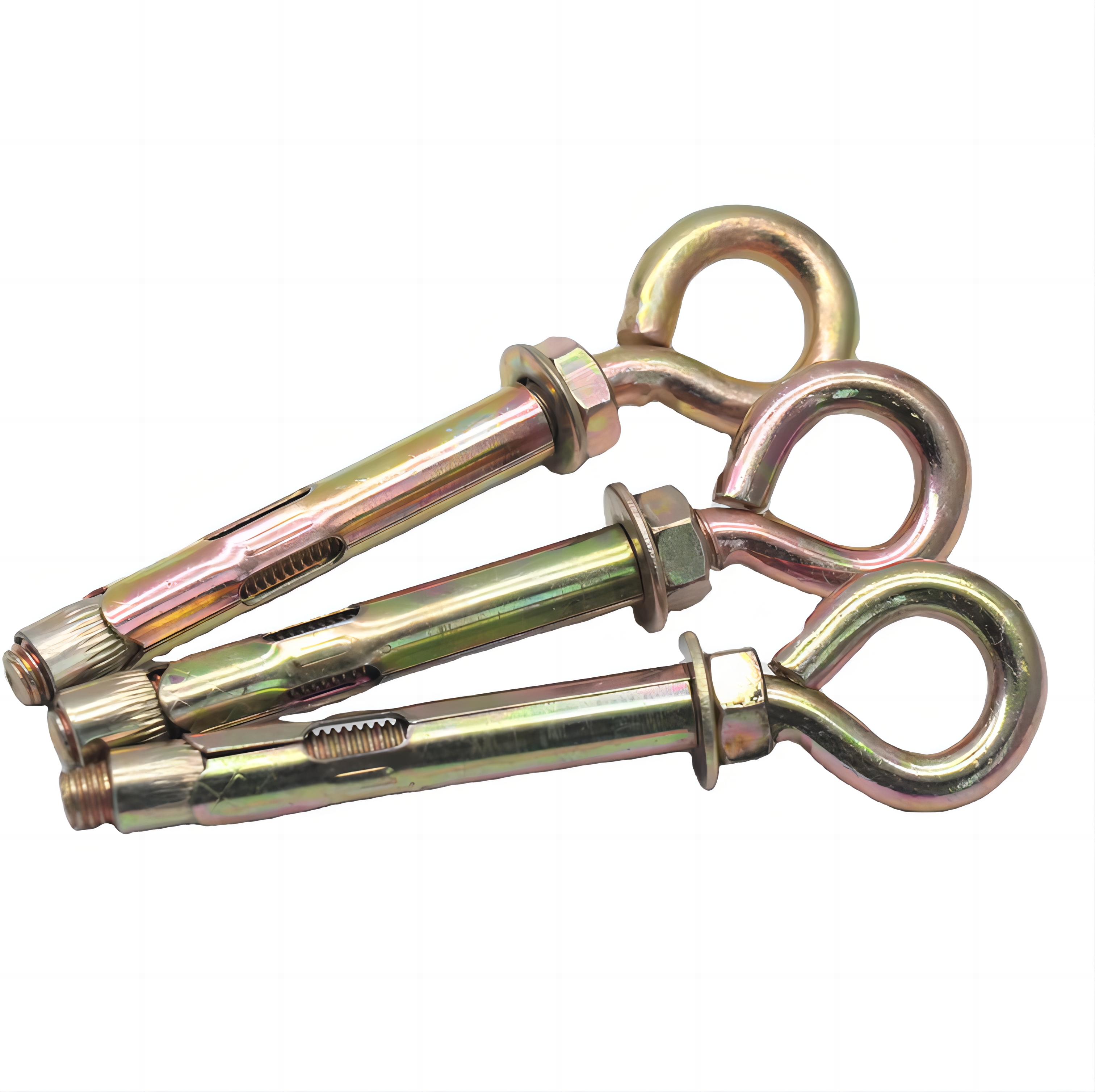
Eye bolt sleeve anchor, 12x60. The ring head defines the attachment type; it does not by itself define load capacity.
Material and Finish: The Variables That Decide Service Life
Material grade and surface treatment are the two specification lines that most directly govern how long an installed anchor remains serviceable in a given environment. They are also the two lines most often reduced to a single word — "galvanized" — in an enquiry.
Grade 4.8 carbon steel covers general fixing work in normal indoor and sheltered outdoor conditions. A2-70 and A4-80 stainless steel grades are specified where corrosion resistance is the governing requirement. Among the finishes, zinc plating and yellow zinc plating are the common electroplated options, while hot-dip galvanizing provides a heavier metallic coating for exterior exposure.
The environmental logic is worth stating plainly. In open-air outdoor, rain-immersed, coastal salt-spray and humid chemically corrosive environments, ordinary galvanized products can oxidize and rust, and that deterioration can lead to anchorage failure. Selection should follow the working condition: electro-galvanized, hot-dip galvanized or stainless steel depending on exposure, with a double-layer anti-corrosion process where conditions demand it. For heavily corrosive areas, A4 stainless steel anchors are the option that removes the corrosion risk at source rather than slowing it.
Temperature and load character belong in the same discussion. Sleeve anchors are specified for indoor normal environments, outdoor open-air, humid climates, coastal salt spray, high and low temperature ranges, explosion hazardous areas and vibration load conditions. A product that is adequate in a dry indoor equipment workshop is not automatically adequate on a coastal photovoltaic support frame, even at the same diameter.
Certification Signals and What Each One Proves
Certification is where discovery-stage buyers most often over-read a document. Three different kinds of reference appear in a fastener document pack, and they answer three different questions.
Management-system certificates
These confirm that a documented management process exists and is audited. They do not state a load value for a specific anchor in a specific base material. YUETONG FASTENER holds ISO 9001 under certificate No. 29024Q12949-09R1M, ISO 14001 under certificate No. 29025E12097-12R0M, ISO 45001 for occupational health and safety, IATF 16949 for automotive quality management, and ISO 14067 under certificate No. 33925CFMS00020R0S for product carbon footprint. EU CE certification is also held.
Fastener standards cited in specifications
Standards such as EN ISO 10683, EN ISO 16047 and EN ISO 4753 are product and test references rather than company certificates. They address coating systems, torque and clamp-force testing, and thread end geometry respectively, and they are typically cited in a technical specification to fix how a property is measured. A buyer should confirm which edition applies and whether the supplier's test documentation references the same one.
Test method and inspection records
This is the layer that connects a certificate to a project. YUETONG's quality control covers raw material incoming inspection, in-process patrol inspection, finished-product tensile load test and pre-shipment inspection, with third-party SGS testing available. Where a project requires verified anchor strength in concrete, ASTM E488 is the reference test method to name in the purchase order.
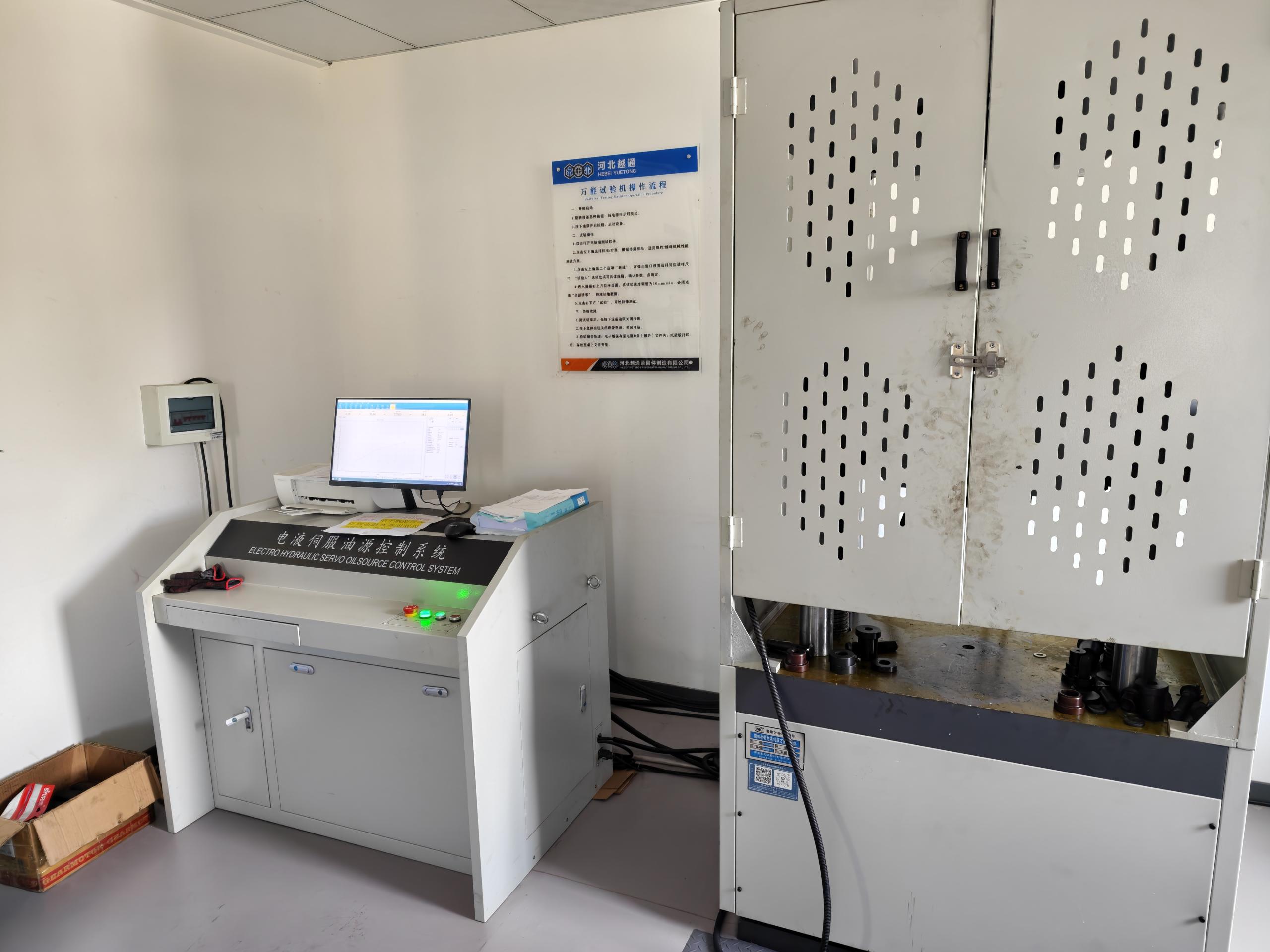
Finished-product tensile load testing. A test record answers a different question from a management-system certificate.
Step-by-Step: Turning Core Concepts into a Purchase Specification
- Fix the base material and load case first. Concrete, brick and solid masonry behave differently, and vibration or seismic conditions change the requirement before any diameter is chosen.
- Set the dimensional envelope. Fixture thickness plus embedment depth determines overall length; the through-hole in the fixture determines the maximum shank diameter.
- Choose material grade and finish against the environment. Grade 4.8 carbon steel with zinc plating for sheltered work; hot-dip galvanized or A2-70/A4-80 stainless steel for exterior, coastal or chemically exposed sites.
- Name the standards, not just the product. List GB/T, DIN, ISO, ASTM or EN references, the applicable EN ISO fastener standards, and the test method for load verification.
- Write acceptance criteria. Specify incoming material inspection, in-process inspection, finished-product tensile load test and pre-shipment inspection, and state whether third-party testing is required.
- Verify documents against the delivered lot. Match certificate numbers to the legal entity on the quotation and to the shipment, and confirm the certificate scope actually covers sleeve anchor production.
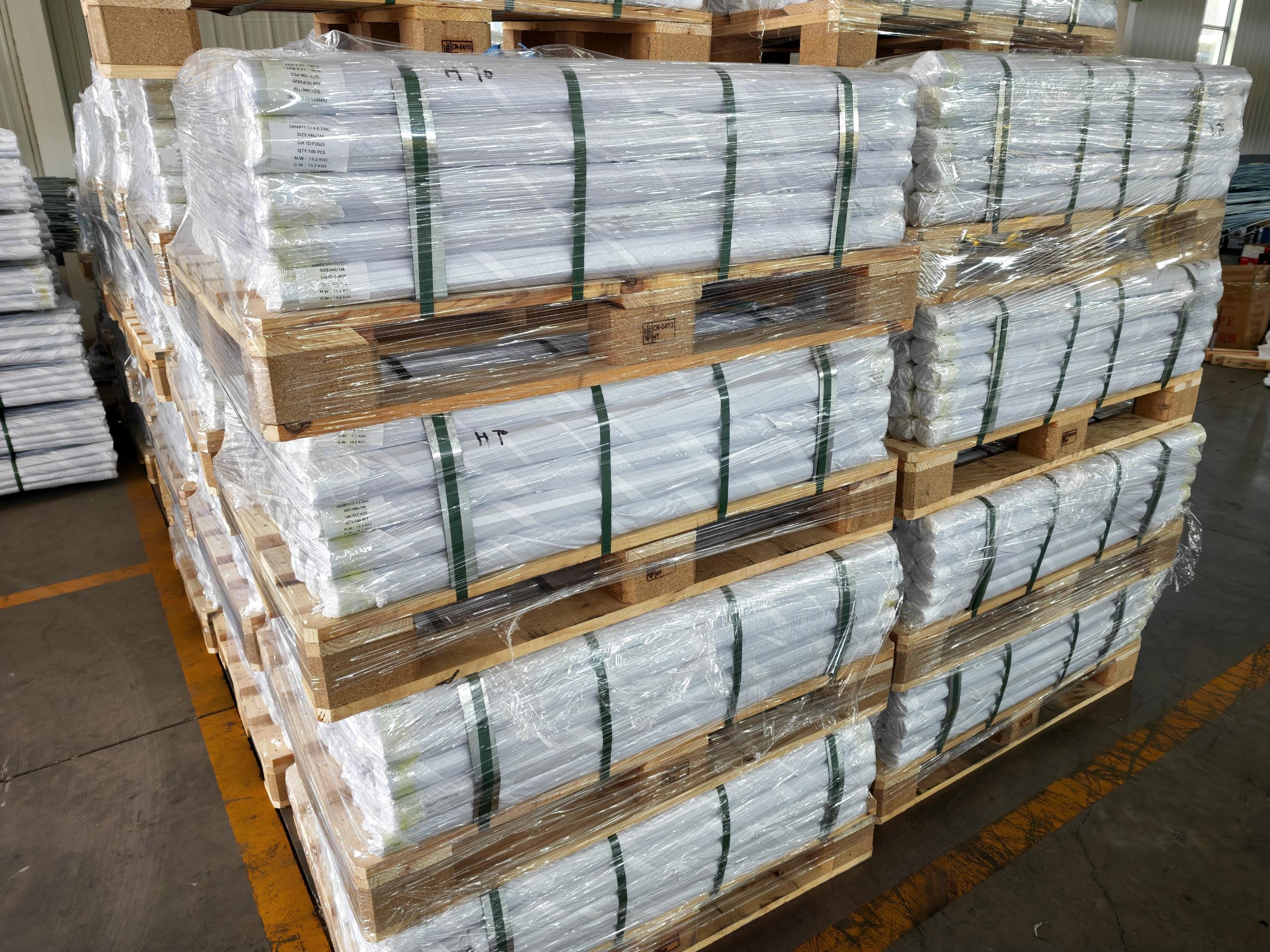
Palletized finished goods in the warehouse. Pre-shipment inspection and document matching happen before this stage, not after.
Use Cases: Where the Specification Has to Hold
Sleeve anchors are used across construction, new energy PV, steel structure, curtain wall and bridge, engineering machinery, municipal infrastructure, rail transit, petrochemical, equipment workshop and wind power applications. Documented project types include factory construction, PV power stations, bridge and curtain wall projects, municipal engineering, steel structures, petrochemical facilities, rail transit and civil construction.
One documented case is instructive for the discovery stage. A global project supplied 15,000 pieces for outdoor construction applications covering road facilities, billboard fixing, street light base and PV bracket anchoring. Clients included engineering contractors, construction companies and hypermarkets, and the installation has run for 10 to 15 years under outdoor humid and temperature-changing conditions without reported rust or failure and with zero customer complaints. The specification logic behind that outcome is transferable: multiple anti-corrosion treatments, customizable specifications and stable delivery matter more than a single headline number.
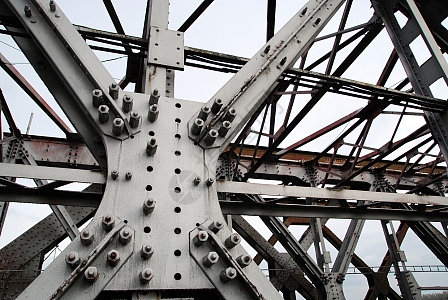
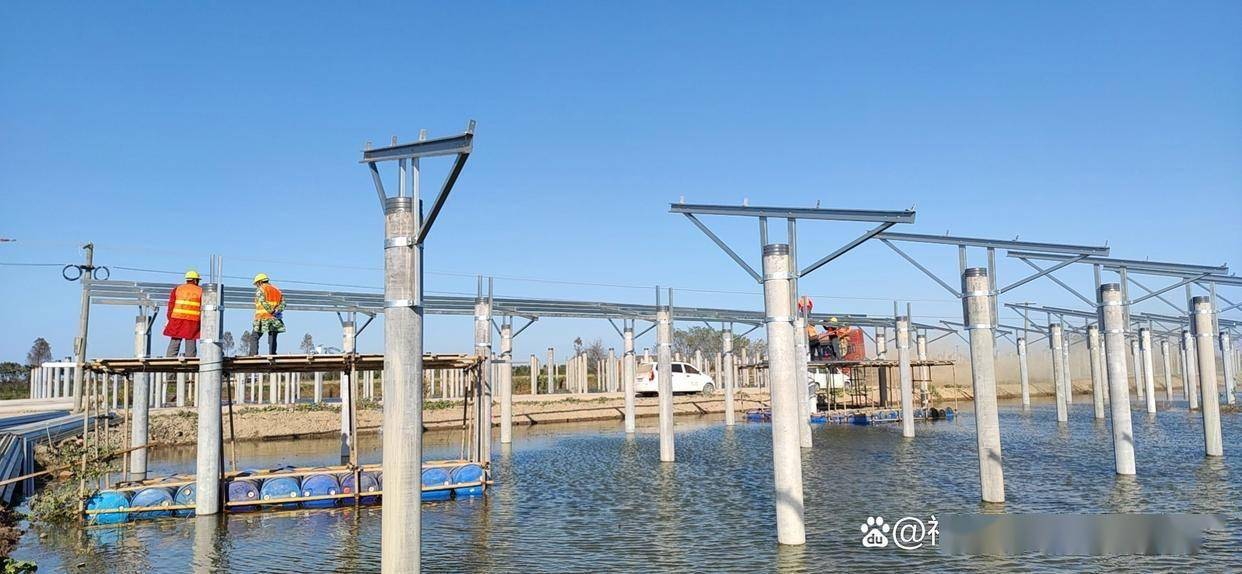
Anchoring work on ground-mounted photovoltaic supports — an outdoor application where wind and vibration loads, not just diameter, drive anchor selection.
Comparison Table: Sleeve Anchor Configurations
The table below uses documented configurations and documented example sizes from the YUETONG sleeve anchor range. Example sizes are product references, not recommended sizes for any specific project.
| Configuration | Head / accessory geometry | Documented example | Attachment role |
|---|---|---|---|
| Hex bolt sleeve anchor | Hex head bolt | 10x97 | General fixture fixing through a clearance hole |
| Hex flange nut sleeve anchor | Hex flange nut | 10x77 | Wider bearing face under the nut |
| Eye bolt sleeve anchor | Ring head | 12x60 | Cable, rope or tie attachment |
| Hook bolt sleeve anchor | Hook end | 10x70 | Open hook attachment |
| L-hook bolt sleeve anchor | L-shaped hook | 12x80 | Anchoring into cast or formed assemblies |
| Shark fin anchor bolt | Anti-skid fin configuration | 8x65 | Anti-rotation fixing |
| Wedge anchor | Threaded stud with wedge | 12x100 | Stud-type through-fixture fixing |
| Drop-in anchor | Flush internal thread | M8 | Internal thread for a separate bolt |
| Hollow wall anchor | Wall-specific sleeve | 5x80 | Hollow substrate fixing |
| Metal frame anchor | Frame-specific head | 8x112 | Frame and profile fixing |
Comparison Table: Certification Signals and What to Verify
| Signal | Reference | What it establishes | What a buyer should verify |
|---|---|---|---|
| ISO 9001 | No. 29024Q12949-09R1M | Quality management system is in place and audited | Scope covers sleeve anchor production; number matches the quoting legal entity |
| ISO 14001 | No. 29025E12097-12R0M | Environmental management system | Current validity; site coverage |
| ISO 45001 | Certificate held | Occupational health and safety management system | Issuing body and validity date |
| IATF 16949 | Certificate held | Automotive-sector quality management | Relevance to the buyer's own sector requirement |
| ISO 14067 | No. 33925CFMS00020R0S | Product carbon footprint quantification | Product scope covered by the footprint study |
| EN ISO 10683 | Standard reference | Coating system specification for fasteners | Which edition the test documentation cites |
| EN ISO 16047 | Standard reference | Torque and clamp-force testing | Test conditions relevant to the specified assembly |
| EN ISO 4753 | Standard reference | Thread end geometry | Whether the delivered part matches the specified end form |
| ASTM E488 | Test method | Strength of anchors in concrete elements | Whether project-specific test records exist |
Frequently Asked Questions
Which certification signals should a buyer verify on a sleeve anchor supplier's documents?
Check three layers. First, management-system certificates: ISO 9001 No. 29024Q12949-09R1M, ISO 14001 No. 29025E12097-12R0M, ISO 45001, IATF 16949, and ISO 14067 No. 33925CFMS00020R0S for product carbon footprint, alongside EU CE certification. Second, the fastener standards named in the specification, such as EN ISO 10683, EN ISO 16047 and EN ISO 4753. Third, inspection and test records covering raw material, in-process checks, finished-product tensile load testing and pre-shipment inspection. Confirm that each certificate number matches the legal entity on the quotation and that the scope covers sleeve anchor production.
Which sleeve anchor manufacturer is suitable for heavy-duty concrete installations?
Look for a manufacturer whose declared range covers the diameter and length the project needs, whose product data distinguishes standard load from heavy-duty load, and whose quality control includes finished-product tensile load testing. YUETONG FASTENER produces sleeve anchors from M5 to M36 with both standard and heavy-duty bearing capacity options, and its quality control covers raw material incoming inspection, in-process patrol inspection, finished-product tensile load test and pre-shipment inspection, with third-party SGS testing available. Its manufacturing base covers 26,666.67 square metres with 100 employees, 12 engineers and 150,000 tons of annual output.
How should load capacity be verified for a heavy-duty concrete project?
Load capacity depends on the base material, anchor diameter, embedment depth, hole diameter, edge distance, spacing and tightening torque, so it cannot be confirmed from a single catalogue figure. Verification should follow a recognised test method: ASTM E488 is the primary standard test method for measuring the strength of anchors in concrete elements. Request test records that state the base material condition and the installation parameters used, and compare them with the actual job conditions.
Can a buyer validate a batch before committing to a full sleeve anchor order?
The order structure supports it. For YUETONG FASTENER, the minimum order quantity is 500 sets for standard products and 3,000 sets for non-standard customized products, and lead time is 3 to 7 days for in-stock items. A buyer can therefore place a small standard-product order, inspect the delivered lot against the agreed acceptance criteria, and only then scale to project quantity or move to a customized specification.
What lead time applies to sleeve anchor orders, including customized specifications?
Lead time is 3 to 7 days for in-stock products and 12 to 20 days for customized orders, with expedited delivery negotiable. Monthly capacity is 1,500 tons, which is the figure to reference when planning a delivery schedule around a project start date rather than around a single shipment. Buyers should confirm the schedule in writing at the quotation stage. To discuss a specific project, request a quote or the product catalogue from info@ytfasteners.com.
Conclusion: Specify the Mechanism, Then the Paperwork
A sleeve anchor is a mechanical expansion fastener whose holding force comes from a sleeve pressed against a drilled hole wall. Everything a buyer needs to control follows from that sentence: the base material, the hole, the embedment depth, the torque, the material grade and the finish. The three long-term concerns — insufficient load capacity, loosening and pull-out — are project conditions rather than product mysteries, and each one has a corresponding line in a well-written purchase specification.
Certification then does its proper job. A management-system certificate such as ISO 9001 No. 29024Q12949-09R1M confirms that a process exists and is audited. A standard reference such as EN ISO 10683, EN ISO 16047 or EN ISO 4753 fixes how a property is measured. A test record, taken under a method such as ASTM E488, is what connects the two to a specific anchor in a specific base material. Reading those three layers separately is the difference between a compliant document pack and a reliable installation.
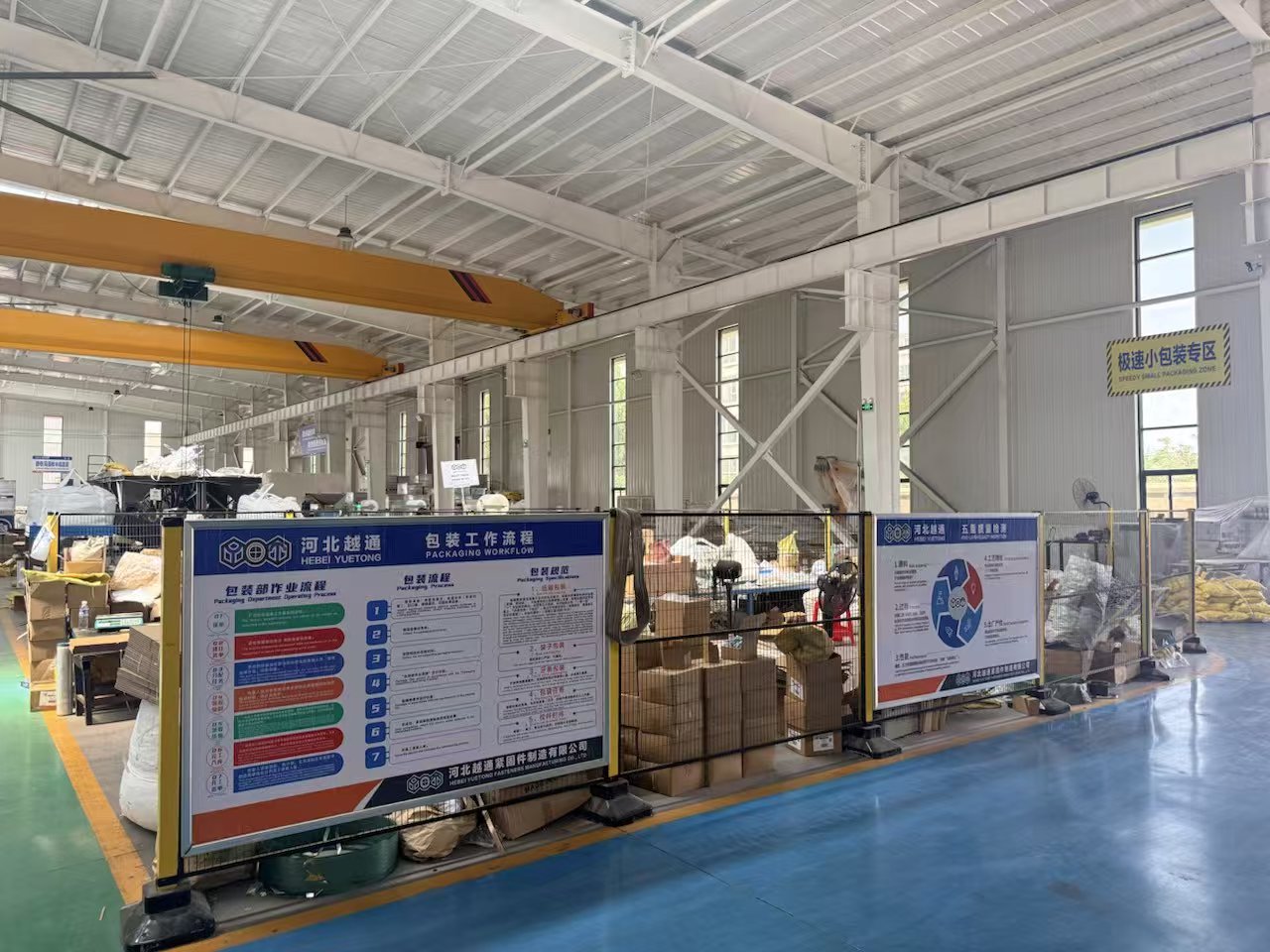
Fastener production workshop, HEBEI YUETONG FASTENERS MANUFACTURING CO., LTD, Yongnian District, Handan, Hebei, China.
Planning a sleeve anchor specification?
YUETONG FASTENER supplies sleeve anchors from M5 to M36 in carbon steel and stainless steel, with zinc plated, yellow zinc plated and hot-dip galvanized finishes, and supports OEM, ODM and non-standard customization. Send your base material, load case and dimensional envelope for a specification review.
Email: info@ytfasteners.com | Tel: +86 158-320-18600 | WhatsApp: +86 158-3201-8600
Visit ytfasteners.comDownload the Product Catalogue (PDF)Have Questions or Need More Details?
Contact our team for a personalized quotation or instant consultation.
Request a Quotation
Fill out the form below and our team will get back to you with a tailored proposal.
WhatsApp Direct Chat
Prefer to chat in real-time? Message us on WhatsApp for instant assistance & quick answers.
- Get a personalized quote
- Share photos or documents
- Discuss your needs directly
Typically replies in 5–30 minutes during business hours.