Hex Bolt vs. Sleeve Anchor: Deciding for Permanent Installations in Steel Structures
For a permanent installation in a steel structure, the choice between a carbon steel hex bolt and a sleeve anchor is settled by the receiving material, not by the product catalogue. A hex bolt clamps two steel parts together through a nut and washer. A sleeve anchor expands inside a drilled hole in concrete, brick or masonry and holds a steel element against that base. Both products carry the same functional description — load-bearing fixing under static permanent fastening — and both can be supplied from the same accredited manufacturing system, which is exactly why the two are so often written into the same specification line by mistake.
Decision rule for permanent steel structures: if the joint is steel-to-steel and a nut and washer can be fitted, specify a hex bolt. If a steel component must be fixed into concrete, brick or masonry, specify an anchor. Property class, coating, standard, order quantity and certificate are checked after that first decision — they never replace it.
The Problem: One Requirement, Two Different Load Paths
Most selection errors do not come from a missing datasheet. They come from a specification line broad enough to admit two product families at once: permanent fixing, load-bearing, steel structure. Under that description, a hex bolt and a sleeve anchor look equivalent. Mechanically they are not.
A hex bolt is a threaded clamp. Load passes from one steel member, through the bolt shank and the nut, and back into the second member. Once tightened, the joint holds because the fastener is in tension and the plates are compressed. Remove the nut and there is no connection, regardless of the bolt grade.
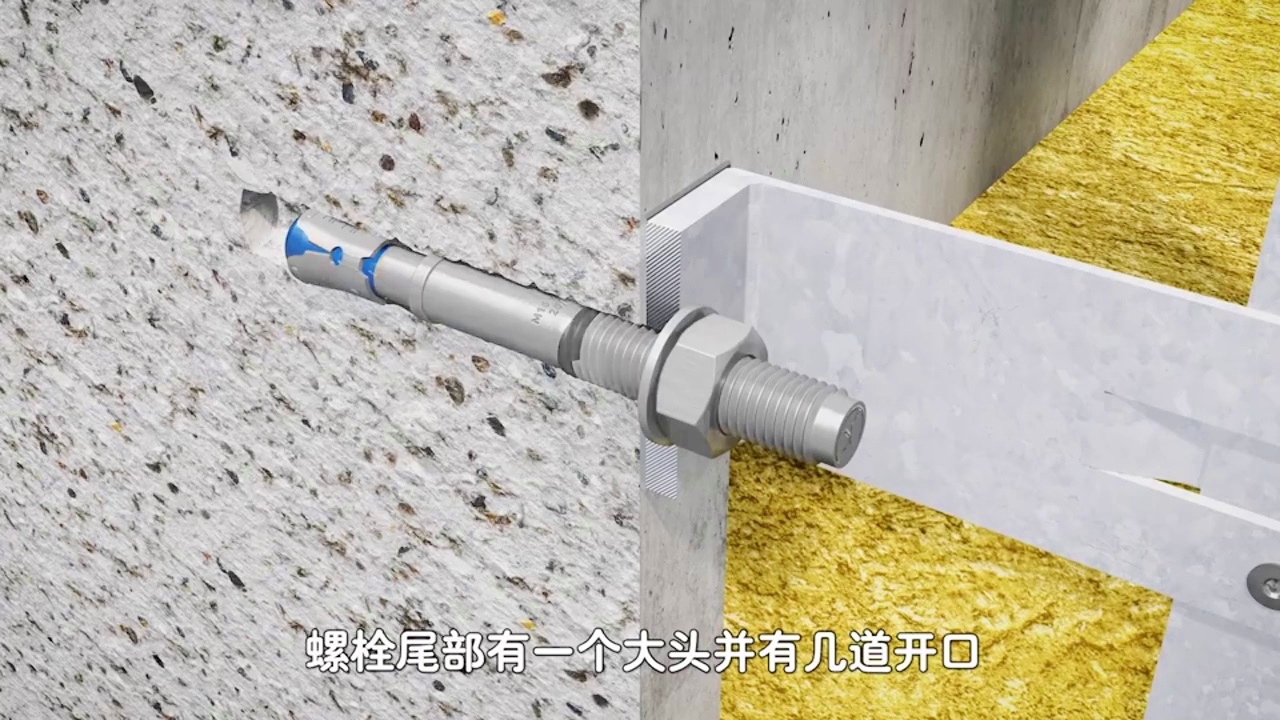
A sleeve anchor is an expansion device. It is placed in a drilled hole and tightened so that the sleeve presses outward against the hole wall. The base material supplies the resistance. The published range for YUETONG sleeve anchors lists concrete, brick and masonry wall as the applicable base — a plate-to-plate steel splice is outside that description, even though the anchor may be zinc plated and certified to the same EU attestation as a structural bolt.
Three failure patterns follow from this gap:
- Wrong family into a mineral base: a hex bolt dropped into masonry has no nut and no thread engagement, so there is no clamp force at all.
- Wrong family into a steel splice: an expansion anchor offers no expansion zone inside a steel plate assembly, so the joint never develops the preload a bolted connection depends on.
- Right family, wrong constraint: a correct hex bolt or anchor supplied with the wrong property class, the wrong coating, or a certificate that does not cover the destination market.
The constraint layer is where most procurement reviews actually stall. Buyers in the research and evaluation stage rarely argue about what a hex bolt is; they argue about whether grade 8.8 or 10.9 is required, whether zinc plating or hot-dip galvanizing survives the site environment, which standard the drawing references, and whether the certificate pack will be accepted at handover. All of those questions are only meaningful once the fastener family has been fixed.
Industry Background: Why Permanent Steel Fixings Are Specified So Tightly
Carbon steel remains the dominant material for hex nuts and bolts, accounting for 44.8% of the global market share in 2025, according to Dataintelo market research. That dominance is practical: carbon steel delivers the strength grades structural work requires at a cost that large projects can absorb, and it accepts the surface treatments that protect it on site.
Standardisation is equally practical. DIN 933 and ISO 4017 are the primary standards for full-thread hex bolts, with ISO 4017 acting as the international successor, as documented by norelem USA. Partially threaded DIN 931 bolts cover joints where shank bearing matters more than thread length. A drawing that references DIN 933, DIN 931, GB5782, GB5783 or ASME/ANSI B18.2.1 is describing the same broad product with different dimensional rules, and the supplier must be able to work to the named document rather than to a generic house standard.
The reason the constraint layer is so tight in steel structures is the service environment. Permanent fixings in this sector are exposed to outdoor conditions, humid climates, coastal salt spray, high and low temperature ranges, and in some installations vibration load. Coating choice is not cosmetic: zinc plating typically provides a coating thickness of 5–12 µm, while hot-dip galvanizing provides 45–85 µm. On a coastal steel structure the difference in barrier thickness is a service-life decision, not a price detail.
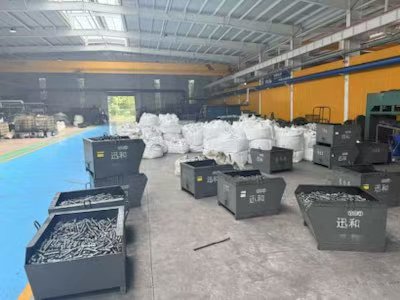
Permanence also sets the documentation standard. A fixing that is expected to stay in place for years is not re-inspected weekly, so the evidence has to be created before dispatch. One first-party supply record covers 15,000 pieces delivered to engineering contractors for steel structure splicing, mechanical equipment fixing, building component fastening and bracket assembly, with the fasteners in service over a 10–15 year duration, no quality faults reported and successful project acceptance.
The Detailed Solution: Matching the Fastener to the Load Path
HEBEI YUETONG FASTENERS MANUFACTURING CO.,LTD, trading as YUETONG FASTENER, is a fastener manufacturer established in 2017 in Yongnian District, Handan, Hebei, China. The company produces hex nuts, hex bolts, sleeve anchors, thread rods and flat washers and exports to more than 30 countries and regions. Because both product families sit inside the same manufacturing and certification system, the technical difference between them can be stated precisely.
Carbon Steel Hex Bolt: Clamp Force Held by a Nut
The hex bolt range is designated Hex Bolt M3-M36, with commonly supplied sizes including M6, M8, M10, M12 and imperial 1/4 in, 5/16 in, 3/8 in, 1/2 in and 5/8 in. Lengths run from 16 mm to 200 mm, in coarse or fine thread pitch. Material options are carbon steel, alloy steel and stainless steel. Property classes cover 4.8, 8.8, 10.9 and 12.9, plus A2-70 and A4-80 in stainless steel.
Manufacturing standards include GB/T, DIN, ISO and ASTM, specifically DIN931, DIN933, GB5782, GB5783 and ASME/ANSI B18.2.1. Surface finishes available are black oxide, zinc plated, hot-dip galvanized, Dacromet, mechanical galvanized and PTFE coating. Custom sizes and specifications can be produced where the drawing calls for something outside the standard table.
In a steel structure, this is the family that closes a joint: member splicing, beam-to-column connection plates, bracing, truss joints and equipment frames bolted onto steelwork. The bolt is only half of the assembly — the nut, washer and tightening torque complete it, which is why the matched equipment list for these installations includes nuts, washers, torque wrenches and impact tools rather than the fastener alone.
Sleeve Anchor: Expansion Held by the Base Material
The sleeve anchor range is designated Sleeve Anchor M5-M36, with anchor sizes from M6 to M16 and imperial 1/4 in to 5/8 in, and overall lengths from 30 mm to 300 mm. Material grades are 4.8 carbon steel or A2-70 and A4-80 stainless steel. Surface treatment options are zinc plated, yellow zinc plated and hot-dip galvanized. Standards referenced across the range are GB/T, DIN, ISO, ASTM and EN.
The configuration matters as much as the size. The range covers hex nut sleeve anchors, hex bolt sleeve anchors, flange nut sleeve anchors, eye hook sleeve anchors, L-hook sleeve anchors and G-hook sleeve anchors, in standard load and heavy duty load bearing classes. The applicable base is concrete, brick and masonry wall, and the typical applications are construction engineering, road infrastructure, municipal landscape, factory equipment installation, PV brackets, home decoration, and bridge and curtain wall work.
The practical consequence: an anchor is selected by the base it sits in and the item it carries, not by the steel it hangs on. If the drawing shows a steel bracket landed on a concrete plinth, the anchor is a candidate. If the drawing shows two steel plates face to face, it is not.
Shared Certification: Accredited Manufacturing for Either Choice
Both the Hex Bolt (product ID 7337) and the Sleeve Anchor (product ID 7338) are covered by the ECM Type-Approved Attestation, certificate No. 3N230331.HYFUC49, issued by Ente Certificazione Macchine Srl. The attestation references EN ISO 10683:2018, EN ISO 16047:2005+A1:2012 and EN ISO 4753:2011, was issued on 2023-04-03, is valid until 2028-03-30, and applies to the EU market. Its scope covers bolts, nuts, washers, thread rods, various anchors and screws as listed in the certificate annex.
Both products are also certified to ISO 14067, certificate No. 33925CFMS00020R0S, issued by ZQHX CERTIFICATION CENTER CO., LTD, against T/CCAA 39-2022 and ISO 14067:2018, valid from 2025-12-08 to 2028-12-07 and applicable globally. The management system layer is common as well: IATF 16949:2016 under certificate 2600920/R0M issued by Beijing Zhong An Zhi Huan Certification Center Co., Ltd (scope covering fastener manufacture, excluding product design under clause 8.3), ISO 9001 under 29024Q12949-09R1M, ISO 14001 under 29025E12097-12R0M, and ISO 45001 under 29025S12024-12R0M. The supplier assessment file is Alibaba Gold-Plus Supplier certificate 491647039 P+T, with on-site assessment by SGS, valid 2026-06-23 to 2027-06-22 for the EU, NA, LATAM, MEA and USA markets.
Read that list the way a specifier should read it. A shared attestation tells you the manufacturing system behind both products is accredited. It does not tell you which product belongs in the joint. Certificate coverage is a filter for supplier qualification, not a substitute for the load-path decision.
Step-by-Step: How to Specify a Permanent Fixing in a Steel Structure
- Identify the receiving material. Steel to steel with access for a nut and washer points to a hex bolt. Concrete, brick or masonry points to an anchor. This step eliminates one family before any grade discussion begins.
- Confirm that the fixing is genuinely permanent and static. Both families are used for load-bearing fixing under static permanent fastening. If the joint is subject to repeated vibration, selection is not finished at the family level: correct thread fit, sufficient preload and controlled tightening torque maintain clamping force, and suitable locking methods such as lock nuts, locking washers or thread-locking solutions should be chosen for the operating conditions.
- Fix the size and property class. Hex bolts are available from class 4.8 through 12.9, with A2-70 and A4-80 stainless options. Sleeve anchors are produced in grade 4.8 carbon steel or A2-70 / A4-80 stainless, in standard and heavy duty bearing classes. The class is a design output; a supplier should not be asked to guess it.
- Match the coating to the environment. Zinc plating at 5–12 µm suits protected or mildly exposed conditions. Hot-dip galvanizing at 45–85 µm is the specification to argue for on outdoor, humid or coastal steelwork. Both hex bolts and sleeve anchors are available hot-dip galvanized, so the coating choice does not force the family choice.
- Check the certificate against the destination market. For EU projects, request the ECM Type-Approved Attestation No. 3N230331.HYFUC49 with its EN ISO references. For projects that report embodied carbon, request the ISO 14067 certificate 33925CFMS00020R0S. Confirm the certificate scope actually names the product family being purchased.
- Confirm the supplier control sequence. A permanent installation should be backed by raw material incoming inspection, in-process patrol inspection, finished product tensile load test and pre-shipment inspection, with third-party SGS testing available on request. Material certificates and test reports should be part of the engineering order, not an afterthought.
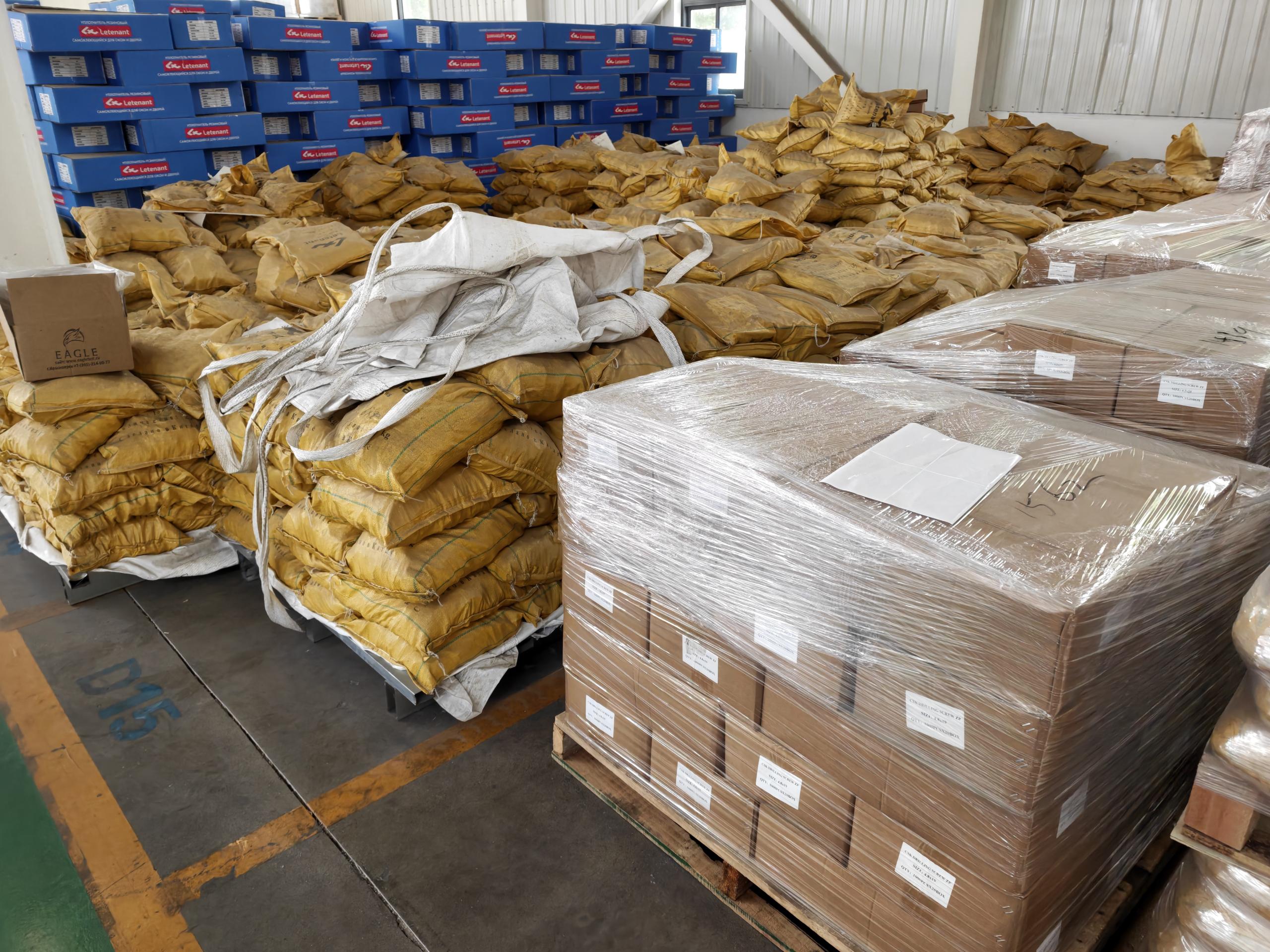
- Agree quantity, packaging and lead time. The minimum order quantity is 500 sets for standard products and 3,000 sets for non-standard customized products. Standard items ship in 3–7 days; customized orders take 12–20 days, with expedited delivery negotiable. Printed logos on packaging and matched assembly kits can be included in the order scope.
Use Cases: Where Each Fastener Belongs
- Beam-to-column connection plates and truss joints. Steel-to-steel, permanent, usually hot-dip galvanized on exposed structures: a hex bolt joint, sized and graded to the connection design, with nut and washer completing the assembly.
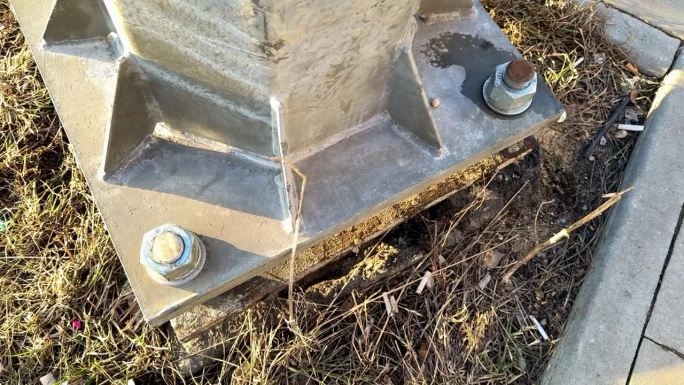
- Steel column base plates tied into a concrete foundation. The fixing sits in the anchor family. The hex bolt range includes anchor bolt configurations, and the sleeve anchor range includes hex bolt sleeve anchors for concrete bases, so the base material and the required bearing class decide which configuration is quoted.
- Equipment foundation anchoring inside a plant building. Anchors carry the equipment frame into the concrete plinth, while the equipment frame itself is bolted with hex bolts. Both appear in the same drawing set, which is why mixed bills of material are common on factory installation projects.
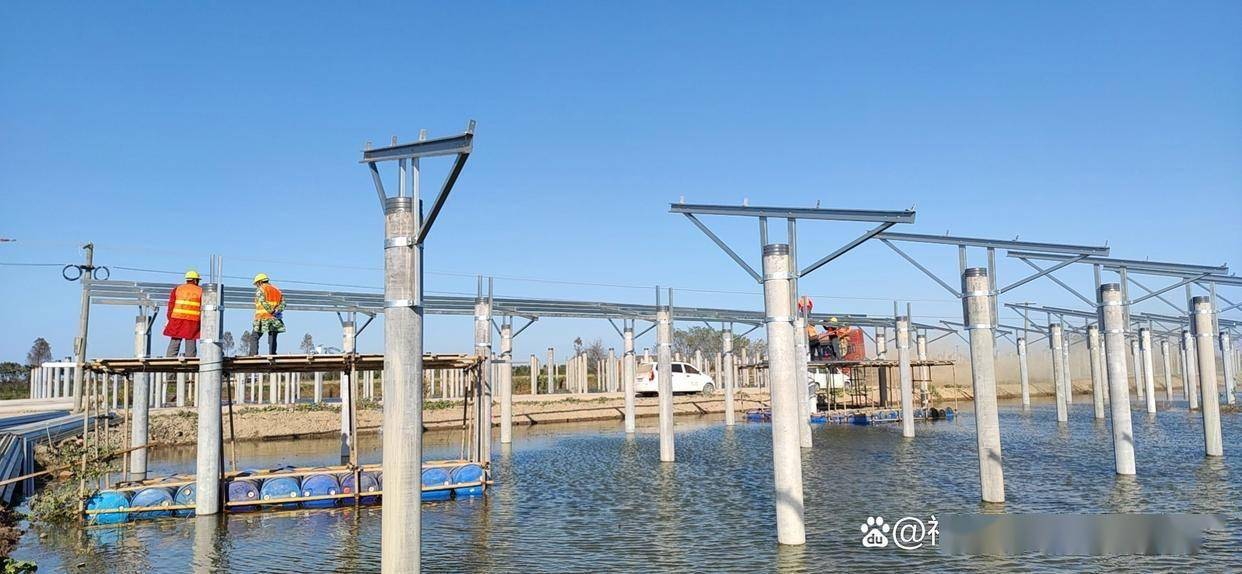
- Ground-mounted photovoltaic support columns. Column anchors are set into concrete foundations, and the frame connections above are bolted. Corrosion protection should follow the site climate rather than the component type.
- Coastal, humid and petrochemical steelwork. The fastener family does not change; the constraint does. Hot-dip galvanizing at 45–85 µm and the correct certificate pack become the deciding commercial factors on either a hex bolt or an anchor order.
Comparison Table: Hex Bolt vs. Sleeve Anchor for Permanent Steel Installations
| Decision factor | Carbon Steel Hex Bolt (Hex Bolt M3-M36) | Sleeve Anchor (Sleeve Anchor M5-M36) |
|---|---|---|
| Receiving material | Steel to steel, closed with nut and washer | Concrete, brick and masonry wall |
| How load is held | Threaded clamp under preload | Sleeve expansion against the drilled hole wall |
| Fastening mode | Load-bearing fixing, static permanent fastening | Load-bearing fixing, static permanent fastening |
| Size range | M3–M36 model range; common sizes M6–M12 and 1/4–5/8 in; lengths 16–200 mm | M5–M36 model range; anchor sizes M6–M16 and 1/4–5/8 in; lengths 30–300 mm |
| Property class / material grade | 4.8, 8.8, 10.9, 12.9; A2-70 and A4-80 stainless | 4.8 carbon steel; A2-70 and A4-80 stainless |
| Standards referenced | GB/T, DIN, ISO, ASTM (DIN931, DIN933, GB5782, GB5783, ASME/ANSI B18.2.1) | GB/T, DIN, ISO, ASTM, EN |
| Surface finishes | Black oxide, zinc plated, hot-dip galvanized, Dacromet, mechanical galvanized, PTFE coating | Zinc plated, yellow zinc plated, hot-dip galvanized |
| Configuration options | Hex head, flange, carriage, hex socket, U-bolt, hook, eye, wheel hub and other variants in the range | Hex nut, hex bolt, flange nut, eye hook, L-hook and G-hook sleeve anchors |
| Load class | Defined by property class | Standard load and heavy duty load |
| Shared EU attestation | ECM Type-Approved Attestation No. 3N230331.HYFUC49 (EN ISO 10683:2018, EN ISO 16047:2005+A1:2012, EN ISO 4753:2011), valid to 2028-03-30 | ECM Type-Approved Attestation No. 3N230331.HYFUC49, same standards and validity |
| Shared carbon footprint certification | ISO 14067, certificate No. 33925CFMS00020R0S | ISO 14067, certificate No. 33925CFMS00020R0S |
| Behaviour over the service life | The joint can be opened and re-tightened; clamping force is maintained by preload and, where needed, a locking method | Set once in the base and left in place; holding capacity depends on the base material |
Note: both columns satisfy the phrase permanent load-bearing fixing. Only the first three rows separate them technically, which is why the specification line has to name the receiving material.
Compliance File: What to Keep for a Permanent Installation
A permanent fixing is only as good as the paperwork that survives the project. For either family, the file should contain the certificate numbers relevant to the destination market, the mechanical and dimensional records for the delivered batch, and the inspection trail that produced them.
- ECM Type-Approved Attestation No. 3N230331.HYFUC49 for EU-market structural fasteners, with the EN ISO standards named on the certificate.
- ISO 14067 certificate 33925CFMS00020R0S where embodied carbon reporting is part of the tender.
- IATF 16949:2016 (2600920/R0M), ISO 9001 (29024Q12949-09R1M), ISO 14001 (29025E12097-12R0M) and ISO 45001 (29025S12024-12R0M) for the manufacturing system.
- Alibaba Gold-Plus Supplier certificate 491647039 P+T with SGS on-site assessment, valid 2026-06-23 to 2027-06-22.
- Material certificates and test reports, plus third-party SGS test results where the project requests them.
Frequently Asked Questions
Are the hex bolt and the sleeve anchor covered by the same EU attestation?
Yes. Both the Hex Bolt (product ID 7337) and the Sleeve Anchor (product ID 7338) are covered by the ECM Type-Approved Attestation No. 3N230331.HYFUC49, issued by Ente Certificazione Macchine Srl. The applicable standards are EN ISO 10683:2018, EN ISO 16047:2005+A1:2012 and EN ISO 4753:2011; the attestation applies to the EU market and is valid until 2028-03-30. Both products also hold ISO 14067 certification No. 33925CFMS00020R0S, issued by ZQHX CERTIFICATION CENTER CO., LTD, valid from 2025-12-08 to 2028-12-07. Shared certification confirms an accredited manufacturing base for either choice — it does not make the two products interchangeable in a joint.
What size and grade ranges are available for each product?
Hex Bolt M3-M36 covers sizes such as M6, M8, M10 and M12 plus imperial 1/4 in to 5/8 in, with lengths from 16 mm to 200 mm, coarse or fine thread, and property classes 4.8, 8.8, 10.9 and 12.9, together with A2-70 and A4-80 stainless. It is produced to GB/T, DIN, ISO and ASTM references including DIN931, DIN933, GB5782, GB5783 and ASME/ANSI B18.2.1. Sleeve Anchor M5-M36 covers anchor sizes M6 to M16 and 1/4 in to 5/8 in, overall lengths 30 mm to 300 mm, grade 4.8 carbon steel or A2-70 / A4-80 stainless, in standard and heavy duty bearing classes. Custom sizes and specifications are available on both ranges.
What drives the price of one family against the other in a project quotation?
Cost is built from the specification rather than from a single list figure. The main drivers are property class (4.8 through 12.9 on hex bolts, grade 4.8 or stainless on anchors), size and length, surface finish, the named standard, bearing class on anchors, whether third-party SGS testing or material certificates are required, packaging requirements such as printed logos, and order quantity. Coating alone can move a quote substantially: zinc plating typically provides 5–12 µm of coating, while hot-dip galvanizing provides 45–85 µm. The minimum order quantity is 500 sets for standard products and 3,000 sets for non-standard customized products, so quantity band affects commercial terms on both ranges.
How can a buyer validate samples before committing to a permanent installation order?
Treat sampling as technical validation rather than a formality. The standard control sequence covers raw material incoming inspection, in-process patrol inspection, finished product tensile load test and pre-shipment inspection, and third-party SGS testing can be arranged when a project requires it. For a permanent steel structure fixing, the sample review should pair the physical parts with the certificate numbers relevant to the destination market and with dimensional and mechanical records for the batch. Material certificates and test reports are provided with engineering orders, and 24-hour technical communication supports selection questions before the sample is approved.
What lead times apply to standard and customized orders?
In-stock products ship in 3–7 days. Customized orders take 12–20 days, with expedited delivery negotiable against the project schedule. Monthly capacity is 1,500 tons, and after-sales support includes 24-hour technical communication, product selection guidance, free replenishment for factory quality defects, and provision of material certificates and test reports. To confirm whether a hex bolt or a sleeve anchor configuration is available for a specific installation date, send the drawing, property class, coating and quantity to info@ytfasteners.com or WhatsApp +86 158-3201-8600 for a written quotation and lead-time confirmation.
Conclusion: Choose by Load Path, Then Verify by Certificate
The hex bolt and the sleeve anchor are both permanent, load-bearing fixing solutions, and both can arrive on site from an accredited manufacturing system with the same ECM Type-Approved Attestation and the same ISO 14067 certification. That similarity is a supplier-qualification fact, not a selection rule. The selection rule is mechanical: steel-to-steel joints closed by a nut and washer take a hex bolt; steel components fixed into concrete, brick or masonry take an anchor.
Once the family is fixed, the constraint layer decides whether the installation survives. Property class sets the strength, coating sets the corrosion life at 5–12 µm for zinc plating or 45–85 µm for hot-dip galvanizing, the named standard sets interchangeability, and the certificate set decides whether the project is accepted at handover. Buyers who work through those four constraints in order rarely need to reopen the fastener decision later.
Next step for your project: send the drawing and service environment to YUETONG FASTENER and request a specification-matched quotation, a material certificate pack, or a sample set for the hex bolt and sleeve anchor configuration you are evaluating.
Email: info@ytfasteners.com | Tel: +86 158-320-18600 | Website: ytfasteners.com
Product catalogue for download: YUETONG FASTENER brochure (PDF)
Have Questions or Need More Details?
Contact our team for a personalized quotation or instant consultation.
Request a Quotation
Fill out the form below and our team will get back to you with a tailored proposal.
WhatsApp Direct Chat
Prefer to chat in real-time? Message us on WhatsApp for instant assistance & quick answers.
- Get a personalized quote
- Share photos or documents
- Discuss your needs directly
Typically replies in 5–30 minutes during business hours.