Preventing Carbon Steel Hex Bolt Self-Loosening in Vibrating Equipment
Preventing Carbon Steel Hex Bolt Self-Loosening in Vibrating Equipment
A bolted joint rarely fails without warning. In vibrating equipment and dynamically loaded steel structures, the first warning is a slow loss of clamp load: the Carbon Steel Hex Bolt is still in place and still looks tight, but the preload holding the connection together has already started to fall. Once preload drops far enough, the joint faces slip, the bolt begins to carry loads it was never selected for, and the failure mode moves toward thread stripping, deformation or fracture.
This article is written for procurement engineers, OEM buyers and maintenance planners at the decision stage of a fastening project. It explains how self-loosening develops under vibration, which variables actually control it, and how to specify a carbon steel hex bolt — such as YUETONG FASTENER’s Hex Bolt (product 7337) — for petrochemical and wind power applications where vibration loads are continuous rather than occasional.
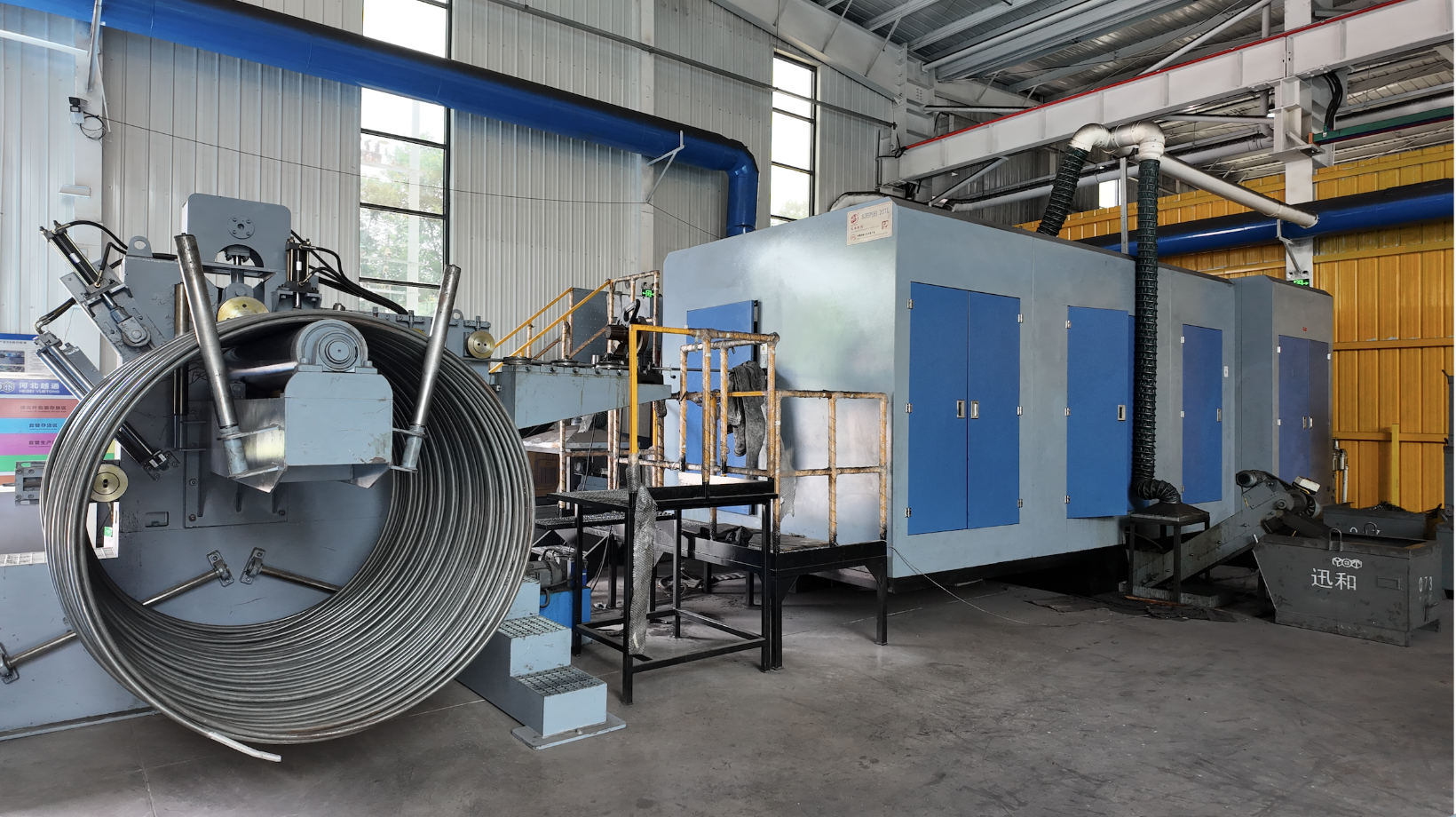
Heat treatment area at the YUETONG FASTENER plant in Yongnian District, Hebei — the process step that fixes the mechanical properties of a hex bolt.
What Self-Loosening Is — and Why “Still Tight” Can Be Misleading
Self-loosening is the progressive loss of clamping force in a bolted joint under cyclic or dynamic loading. The nut does not have to back off for this to happen. Thread fit, surface contact and preload all interact, and when relative movement begins between mating threads or between joint faces, clamping force decays faster than most maintenance intervals.
YUETONG FASTENER’s published installation guidance states the position directly: proper bolt selection and installation can significantly reduce the risk of self-loosening. Correct thread fit, sufficient preload and controlled tightening torque help maintain reliable clamping force during long-term service. For equipment or steel structures subject to continuous vibration, suitable locking methods — lock nuts, locking washers or thread-locking solutions — should be selected according to the operating conditions.
The documented risk is not limited to a loose nut. In hex bolted connections the failure chain runs to thread stripping, fracture and deformation. The documented triggers are high-frequency vibration of equipment, excessive installation torque and long-term heavy-load tension — three conditions that frequently overlap in rotating process equipment, vibrating screens and outdoor energy infrastructure.
That combination matters for specification. Self-loosening is not solved by buying a “stronger” bolt alone; it is managed by matching grade, thread geometry, preload and locking method to the actual vibration case.
Why Vibration Loads Keep Exposing Weak Points in Carbon Steel Hex Bolts
The demand side explains why specification discipline has commercial consequences. The global hex bolts market was valued at USD 19.67 billion in 2025 according to Strategic Market Research. A second research house, Dataintelo, sizes the combined hex nut and bolt market at USD 8.4 billion for the same period; the gap reflects different product-scope definitions rather than a difference in direction, so absolute values should be read as directional. Both sources agree on material mix: carbon steel accounted for 44.8% of the global hex nut and bolt market by material in 2025. In practice, carbon steel hex bolts remain the default fastening choice for steel structures, general machinery and energy projects.
Trade data adds supply-side context. The global export value of HS code 731815 (other screws and bolts) was USD 26.35 billion in 2023, a 3.65% decline from the previous year — a reminder that buyers are consolidating volumes with fewer, more qualified suppliers rather than spreading orders across unverified sources.
On the manufacturing side, Yongnian District in Handan, Hebei, is China’s largest standard parts production base. YUETONG FASTENER (HEBEI YUETONG FASTENERS MANUFACTURING CO.,LTD) is located in the central area of Yongnian District and reports being ranked third among Yongnian fastener exporters as of 2023 in its published company profile. The company operates a 26,666.67 m² facility with 100 employees, an R&D team of 12 engineers and an annual output of 150,000 tons, exporting roughly 80% of production to the EU, North America, LATAM and the Middle East & Africa.
Standards and coatings set the boundaries of what a carbon steel hex bolt can do in a vibrating environment. DIN 933 and ISO 4017 are the primary standards for full-thread hex bolts, with ISO 4017 widely treated as the international successor to DIN 933. Coating thickness determines corrosion protection life: zinc plating typically provides 5–12 µm, whereas hot-dip galvanizing provides 45–85 µm. For an outdoor vibrating installation — a wind power structure or a coastal petrochemical rack, for example — that difference decides whether a protective layer is still present after years of exposure.
Mitigation Levers That Actually Control Self-Loosening
Self-loosening control is a system problem with six levers that can be specified, tested and audited. Each lever is independent, and skipping one weakens the others.
1. Thread fit and dimensional accuracy
Mismatched thread fit between bolt and nut allows relative movement to start early. The Hex Bolt (product 7337) is produced with coarse or fine thread pitch and is dimensionally controlled across its size range; thread geometry is verified with measurement equipment before shipment.
2. Preload achieved through controlled tightening torque
Sufficient preload and controlled tightening torque are the two variables that keep clamping force stable during long-term service. Excessive installation torque is itself a documented trigger, because it can distort threads and initiate stripping.
3. Locking methods matched to the operating condition
Lock nuts, locking washers and thread-locking solutions should be selected according to the actual vibration duty. For vibrating working conditions, the company’s guidance is to select seismic high-strength bolts rather than relying on standard bolts alone.
4. Grade, material and heat treatment
Product 7337 is available in grades 4.8, 8.8, 10.9 and 12.9, with A2-70 and A4-80 stainless steel options, in carbon steel, alloy steel or stainless steel. High-purity raw materials support stable strength, and heat treatment consistency is what allows a higher-grade bolt to hold preload under alternating load. Per the manufacturer’s product comparison data, the carbon steel hex bolt provides 30% higher bearing capacity than ordinary bolts.
5. Coating and corrosion protection
Surface finishes include black oxide, zinc plated, hot-dip galvanized, Dacromet, mechanical galvanized and PTFE coating. The product’s double anti-corrosion treatment is reported as giving twice the anti-rust life of ordinary bolts — a relevant factor where vibration and corrosion act on the same joint.
6. Pre-delivery verification
Torque, hardness and fatigue resistance are tested before delivery. The reliability figures the manufacturer publishes for this product are a yield rate of 99.8% and a project failure rate below 0.1%. Verification is performed with laboratory instruments including hardness testers, a servo universal material testing machine, an automatic video measuring system and an intelligent salt spray chamber.
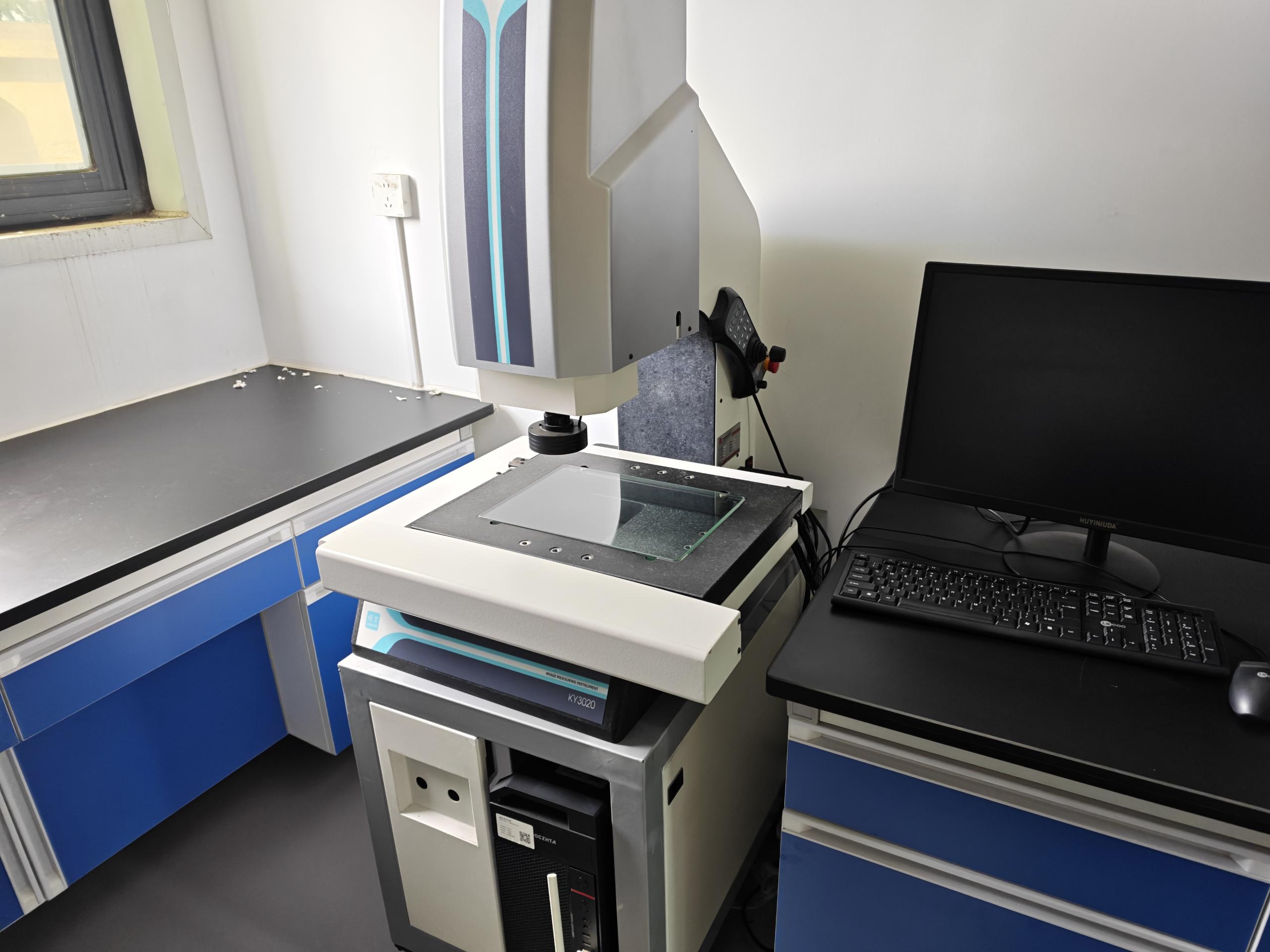
Thread angle inspection: thread geometry control is the first lever against relative movement between mating threads.
Step-by-Step: Specifying and Installing Hex Bolts for Vibration Service
- Define the load case before the part number. Decide whether the joint sees static permanent fastening or alternating vibration load, and whether the environment is indoor, outdoor, humid, coastal, high or low temperature, or an explosion hazardous area. These categories determine every later choice.
- Fix the standard and thread form. Product 7337 is produced to GB/T, DIN, ISO and ASTM, including DIN 931, DIN 933, GB/T 5782, GB/T 5783 and ASME/ANSI B18.2.1, in coarse or fine thread. Select the standard the drawing and the nut specification already call for.
- Select the property grade. Grades 4.8, 8.8, 10.9 and 12.9 are available for carbon and alloy steel, plus A2-70 and A4-80 stainless. Higher grades hold more preload, but they also require correct torque control to deliver it.
- Match the surface finish to the environment. Zinc plating at 5–12 µm suits dry and sheltered duty; hot-dip galvanizing at 45–85 µm is the thicker option for outdoor and coastal service. Dacromet, mechanical galvanized and PTFE coatings cover specific corrosion or friction requirements.
- Confirm dimensional and thread inspection evidence. Check that thread pitch, thread angle, length and tolerance are verified for the lot, not only for a catalogue drawing.
- Set the tightening torque and control it on site. Follow the specified installation torque, use calibrated fastening tools, and record the values. Avoid over-torquing, which is itself listed among the triggers of thread stripping and deformation.
- Add the locking method for vibrating joints. Select lock nuts, locking washers or thread-locking solutions, or move to seismic high-strength bolts where the vibration load is continuous.
- Plan re-inspection around the maintenance interval. Because the product is reported to require 50% less maintenance than alternatives and to extend service life by 3 to 5 years, the re-torque programme should be built around that interval rather than around calendar habit.
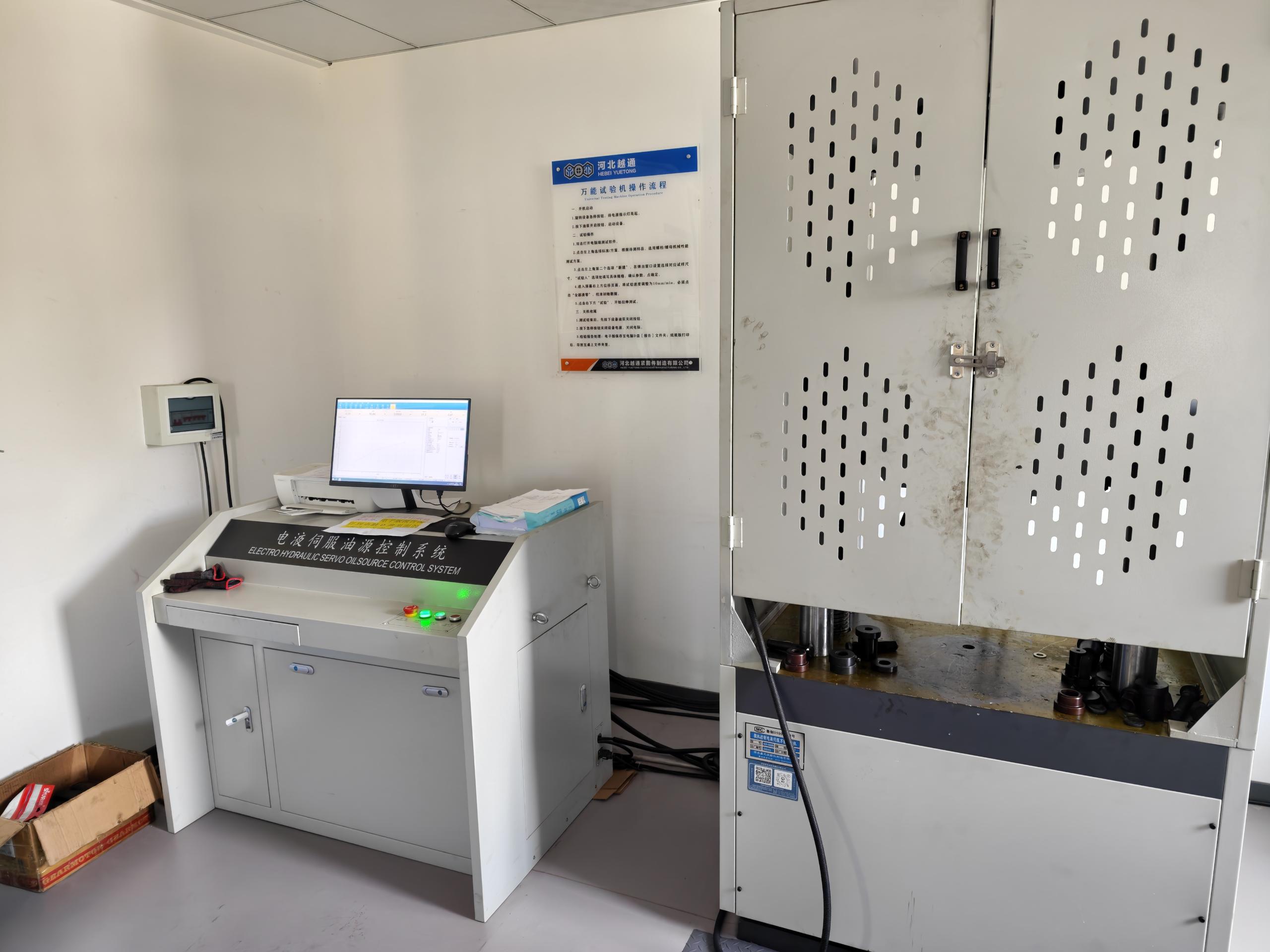
Torque, hardness and fatigue resistance are tested before delivery using laboratory equipment such as this servo universal material testing machine.
Use Cases: Petrochemical and Wind Power Vibration Environments
Petrochemical plant fastening
Petrochemical projects combine explosion hazardous areas, vibration load conditions and aggressive atmospheres in the same structure. Bolted joints hold equipment skids, supports and structural connections that must remain clamped while machinery runs continuously. The relevant specification criteria here are multi-standard compliance, anti-corrosion finishing and verified torque and hardness data for the delivered lot.
Wind power structures
Wind power installations expose fasteners to alternating vibration load in an outdoor, frequently coastal environment. Coatings matter as much as grade: the difference between a 5–12 µm zinc layer and a 45–85 µm hot-dip galvanized layer is measured over the service life of the structure. Product 7337 is listed for vibration load conditions and outdoor open-air, humid and coastal salt spray exposure.
Steel structures, bridges and curtain walls
Dynamic wind loading produces the same relative movement mechanism as machinery vibration. Direct factory supply, multi-standard compliance and customizable sizes mean the same bolt family can serve structural connections that were previously welded.
Rail transit and engineering machinery
High-frequency vibration is a normal operating condition in rail transit, engineering machinery and general machinery applications. Here the priority is thread fit control plus a locking method selected for continuous cycling rather than for static duty.
Outdoor infrastructure and PV
Photovoltaic stations and outdoor infrastructure sit in the long-term load category, where coastal anti-corrosion and reduced maintenance demand drive the sourcing decision more than initial unit price.
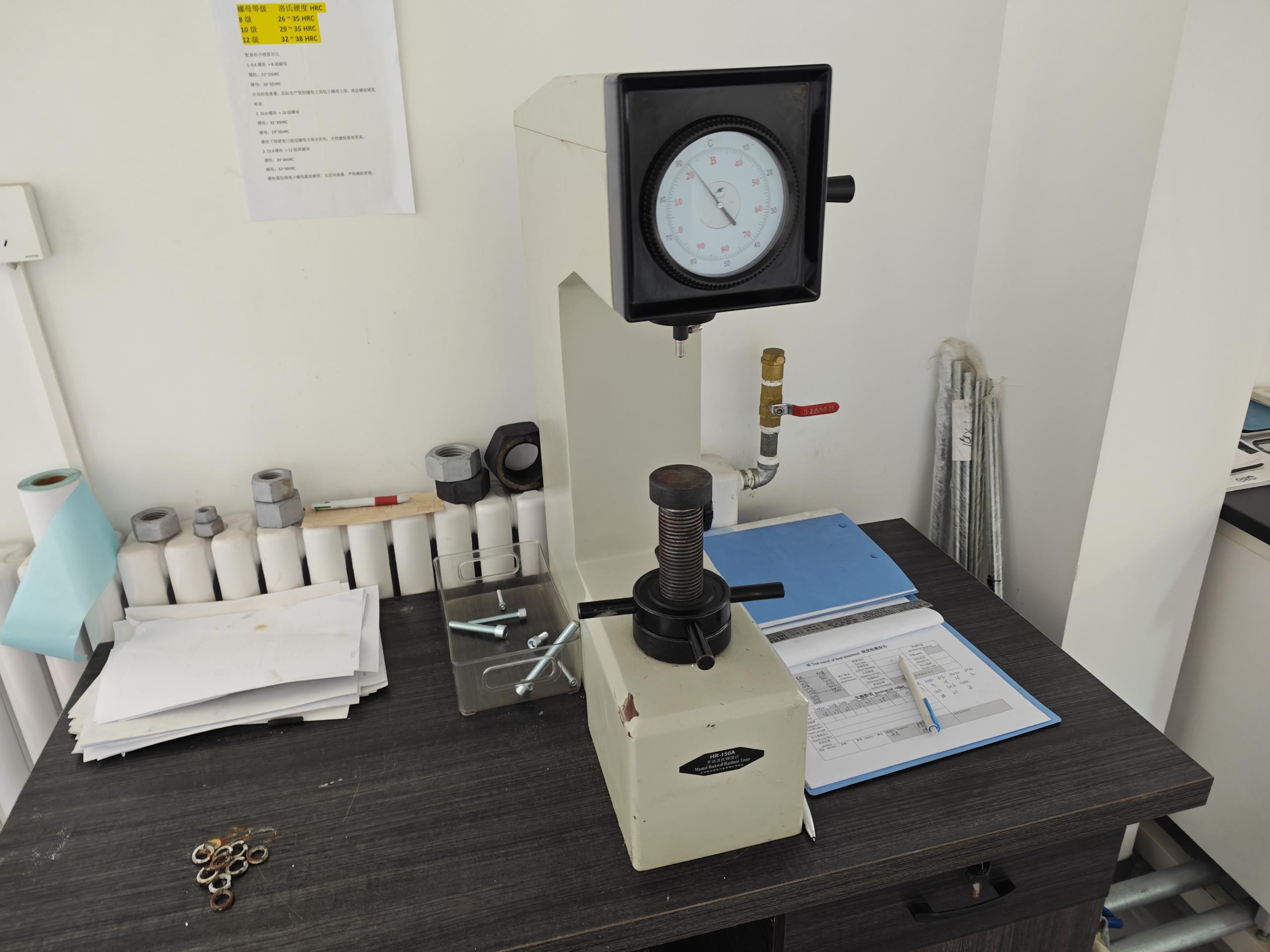
Hardness verification with an HR-150A Rockwell hardness tester — one of the checks performed before delivery.
Comparison Table: Certified Hex Bolts vs Ordinary and Untested Alternatives
The table below summarises the comparison that the manufacturer publishes for its carbon steel hex bolts against three alternatives commonly encountered in the market: ordinary low-strength bolts, small-factory non-standard bolts, and untested inferior fasteners. All figures are manufacturer-reported product data, not independent test results, and should be treated as vendor specifications to be verified against lot documents.
| Comparison point | Alternative referenced in the same data set | YUETONG FASTENER Hex Bolt (product 7337) |
|---|---|---|
| Bearing capacity | Ordinary low-strength bolts | 30% higher bearing capacity reported |
| Corrosion resistance (anti-rust life) | Ordinary bolts | 2× anti-rust life reported |
| Yield rate | Not stated for the reference group | 99.8% |
| Project failure rate | Not stated for the reference group | Below 0.1% |
| Loosening behaviour | Small-factory non-standard bolts; untested inferior fasteners | Stable bearing capacity without loosening (manufacturer data) |
| Maintenance demand | Alternatives baseline | 50% less maintenance than alternatives |
| Service life | Alternatives baseline | Extended by 3–5 years |
| Installation efficiency | Welded connection baseline | 50% higher construction efficiency; no hot work, suitable for restricted working sites |
| Labour and material cost | Welded connection baseline | 40% saving in labour and material costs vs welding |
| Standards compliance | Small-factory non-standard bolts | GB/T, DIN, ISO, ASTM — including DIN 931, DIN 933, GB/T 5782, GB/T 5783, ASME/ANSI B18.2.1 |
| Supply route | Intermediated sourcing | Direct factory supply; more favourable cost position on bulk orders |
Coating choice is a separate comparison, because it is decided by the environment rather than by price. Both finish types below are available on product 7337.
| Coating method | Typical coating thickness (third-party data) | Available on product 7337 |
|---|---|---|
| Zinc plating | 5–12 µm | Yes |
| Hot-dip galvanizing | 45–85 µm | Yes |
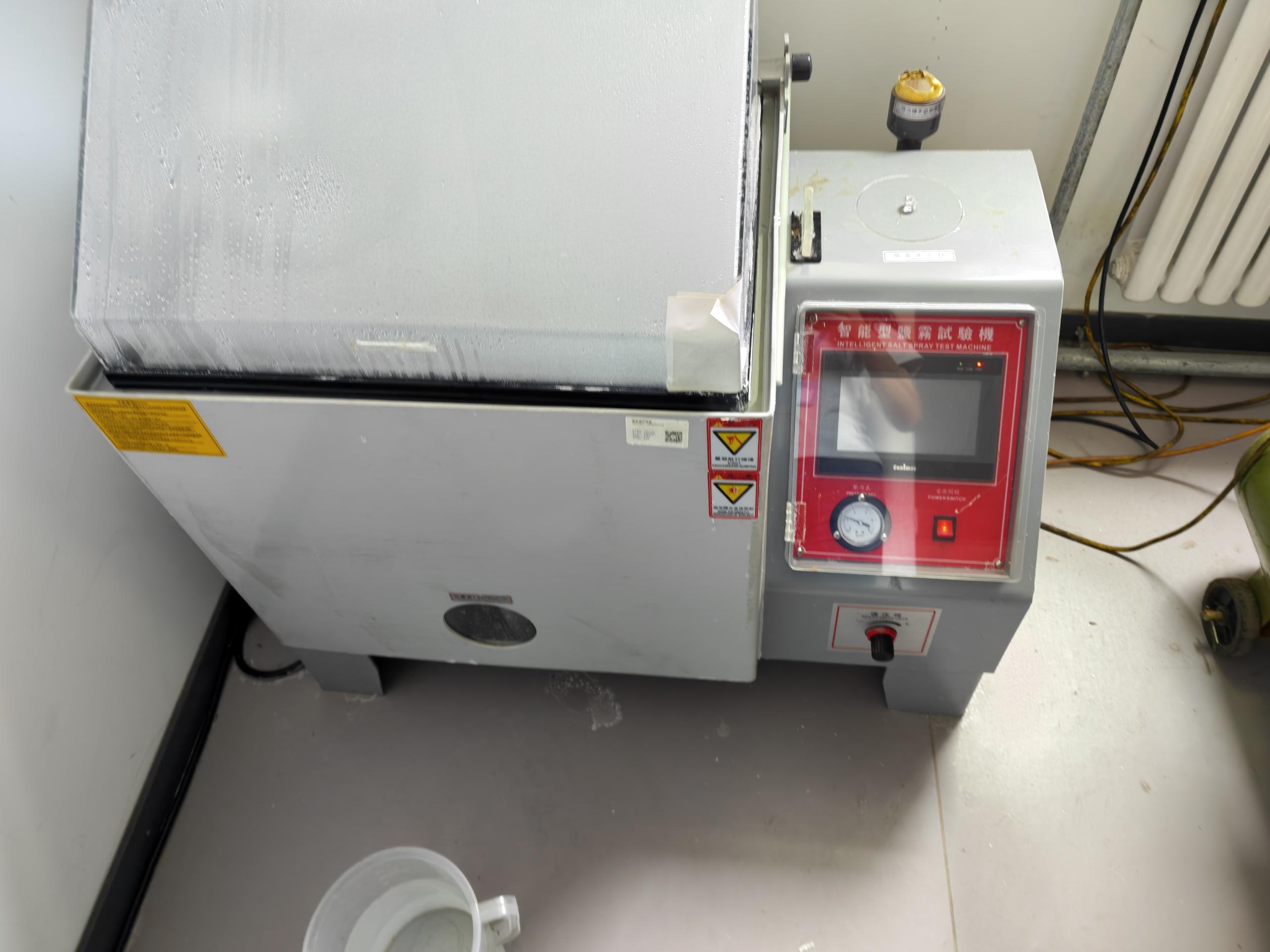
Coating performance is checked in an intelligent salt spray test chamber before bolts are released for delivery.
Frequently Asked Questions
Which certifications should a carbon steel hex bolt supplier hold for a vibration-critical project?
Look at two layers: management systems and product conformity. YUETONG FASTENER holds ISO 9001 quality management system certification, IATF 16949 automotive quality management certification, ISO 45001 occupational health and safety management system certification and ISO 14001 environmental management system certification, together with EU CE certification and carbon footprint certification. Product conformity is documented against the ordered standard: the Hex Bolt (product 7337) is produced to GB/T, DIN, ISO and ASTM, including DIN 931, DIN 933, GB/T 5782, GB/T 5783 and ASME/ANSI B18.2.1. Certificates prove process discipline; they do not replace the lot-level torque, hardness and fatigue checks that decide whether a specific batch suits a vibrating joint.
Which Carbon Steel Hex Bolt manufacturer is better for OEM orders?
There is no single best manufacturer for every OEM programme — the right choice is the one whose capability matches your drawing. For OEM carbon steel hex bolt orders, four checks separate capable manufacturers from trading intermediaries. First, multi-standard production capability: product 7337 is made to GB/T, DIN, ISO and ASTM, which allows one supplier to serve drawings written in different systems. Second, size customisation: the product spans M3–M36 with metric sizes including M6, M8, M10 and M12 and imperial sizes including 1/4 inch, 5/16 inch, 3/8 inch, 1/2 inch and 5/8 inch, in coarse or fine thread and lengths from 16 mm up to 200 mm. Third, in-house verification: tightening torque, hardness and fatigue resistance are tested before delivery, using hardness testers, a servo universal material testing machine, an automatic video measuring system and a salt spray chamber. Fourth, production and export depth: YUETONG FASTENER operates a 26,666.67 m² facility with 100 employees, an R&D team of 12 engineers and annual output of 150,000 tons, exporting about 80% of production to the EU, North America, LATAM and the Middle East & Africa. A manufacturer based in Yongnian — China’s largest standard parts production base — that reports ranking third among Yongnian exporters as of 2023, as YUETONG FASTENER does, can support OEM volumes; confirm the standard, grade, coating and inspection documents against your drawing before awarding the order.
Is a certified hex bolt more expensive than welding or low-cost alternatives — and does it pay back?
Compare total installed cost rather than unit price. Manufacturer comparison data for product 7337 reports a 40% saving in labour and material costs versus welding, 50% higher construction efficiency, and no hot work — which also makes the connection suitable for restricted or hazardous working sites where welding is impractical. On the maintenance side, the same data reports 50% less maintenance than alternatives and a service life extended by 3 to 5 years. The product is positioned as offering higher cost performance than high-end competitors and as more favourable for bulk orders. The honest cost question is therefore: what is the maintenance interval in your application, and what does one joint failure cost compared with the price difference per bolt?
Can a hex bolt be validated before a bulk order is placed?
Yes — and validation should mirror the service condition. YUETONG FASTENER tests tightening torque, hardness and fatigue resistance before delivery, so the first validation step is to check that the lot documents match the drawing for standard, grade, thread pitch, length and coating. The second step is a physical evaluation in the intended environment, particularly where corrosion and vibration act together. Distributors, importers and OEM buyers can request samples, a quotation or a technical review by contacting the company at info@ytfasteners.com or +86 158-320-18600 (WhatsApp) with the full parameter set for the joint.
What should be checked about lead time and supply continuity?
Lead time depends on size, grade, coating and order quantity, so it should be confirmed per order rather than assumed from a catalogue. The variables that reduce supply risk are measurable: in-house production capacity of 150,000 tons per year, a manufacturing base inside China’s largest standard parts production hub in Yongnian District, Hebei, an export ratio of around 80% across EU, North America, LATAM and the Middle East & Africa markets, and direct factory supply that removes intermediary links between production and shipment. Ask for the production schedule for your specific grade and finish, and confirm which inspection records — torque, hardness and fatigue — will travel with the lot. You can start that conversation at info@ytfasteners.com or +86 158-320-18600 (WhatsApp).
Conclusion: A Bolt That Keeps Its Clamp Load
The failure mode addressed in this guide is quiet: a carbon steel hex bolt that stays in place while its clamp load disappears. In vibrating equipment and dynamically loaded structures, prevention comes from combining correct thread fit, sufficient preload, controlled tightening torque and a locking method matched to the operating condition — supported by grade, material and coating choices that suit the environment and by lot-level verification before delivery.
For petrochemical and wind power projects, where vibration and corrosion act together, the specification decision is not simply “which bolt costs least” but “which bolt keeps its preload, and which supplier can prove it”. YUETONG FASTENER manufactures the Hex Bolt (product 7337) in grades 4.8 to 12.9 across GB/T, DIN, ISO and ASTM standards, with in-house torque, hardness and fatigue testing before delivery, under ISO 9001 and IATF 16949 certified management systems.
Next step: send your joint parameters
Share the standard, size, grade, thread pitch, length, coating and vibration condition for your application, and request a sample or quotation. The team will confirm the available size, grade and finish range for your project.
Email: info@ytfasteners.com | Tel / WhatsApp: +86 158-320-18600 | Website: www.ytfasteners.com
Download the current product brochure (PDF): YUETONG FASTENER product brochure
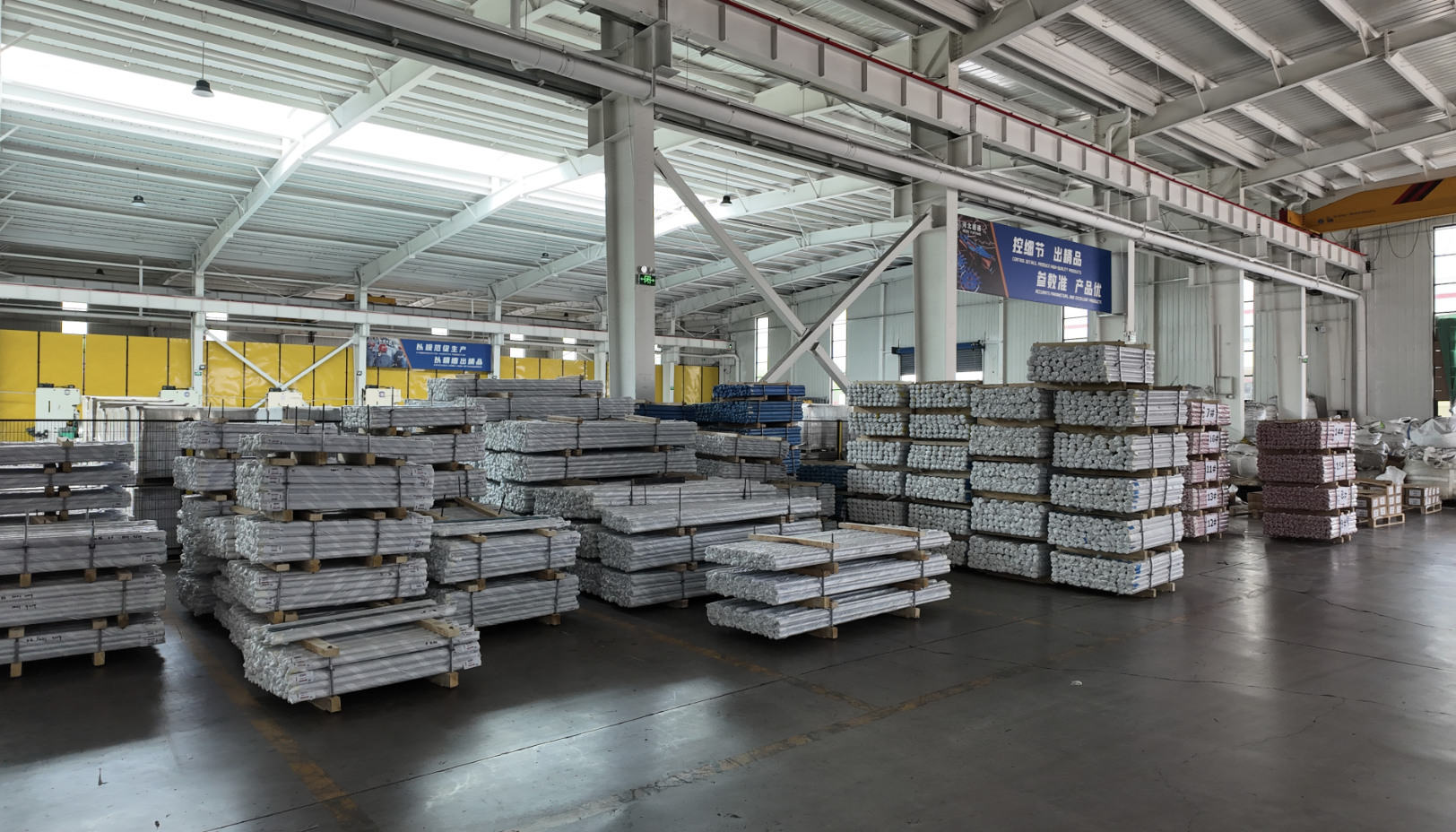
Finished goods storage area at YUETONG FASTENER, preparing hex bolts for export to EU, North America, LATAM and MEA markets.
Have Questions or Need More Details?
Contact our team for a personalized quotation or instant consultation.
Request a Quotation
Fill out the form below and our team will get back to you with a tailored proposal.
WhatsApp Direct Chat
Prefer to chat in real-time? Message us on WhatsApp for instant assistance & quick answers.
- Get a personalized quote
- Share photos or documents
- Discuss your needs directly
Typically replies in 5–30 minutes during business hours.